Long-Tail vs Short-Tail Keywords for Shopify
Long-tail keywords beat short-tail keywords for most Shopify stores, since a phrase like “orthopedic dog bed for large breeds” brings a shopper who knows what they want, while “dog beds” brings a browser and a fight with Chewy. Short-tail terms still anchor your collections. Long-tail phrases bring the orders in year one.
Short answer: Put short-tail keywords on your collection pages and long-tail keywords on your product pages and posts, and expect the long-tail pages to make the first sales.
Long-Tail vs Short-Tail Keywords at a Glance
| Short-tail keywords | Long-tail keywords | |
|---|---|---|
| Example | “candles” | “soy candles for small apartments” |
| Length | One or two words | Three or more words |
| Monthly searches | Tens of thousands | Tens to a few hundred each |
| Who ranks | Big brands with years of links | Any store with the right page |
| Shopper intent | Browsing, comparing categories | Choosing a specific product |
| Time to rank | Years for a new store | Weeks to a few months |
| Best Shopify page | Collection page | Product page or blog post |
What Short-Tail Keywords Do for Your Store
Short-tail keywords define what your store sells at the category level. A one or two word search like “skincare” or “hiking boots” is the label Google uses to file your collection pages. They tell Google which shelf you belong on. They rarely tell a shopper which product to buy.
That is why I map them to collection pages and nothing else. A broad search meets a broad page of products, which is the match Google’s own SEO starter guide describes when it says to think about the words a user might type to find a piece of your content. A collection page is the only page on a Shopify store built to answer “boots.”
The problem is competition. A new store trying to rank for “skincare” is up against retailers with a decade of backlinks, so a short-tail term almost never closes your first sale. Treat short-tail keywords as the frame around your store, not the pages you count on for revenue this quarter.
What Long-Tail Keywords Do for Your Store
Long-tail keywords bring the shoppers who are ready to buy: a phrase with three or more words spells out the product, the use case, or the problem, and the person typing it has already done the browsing. “Adjustable bed for sleep apnea” is a shopper with a budget and a credit card. “Beds” is a person on a couch.
The volume looks small on a report and adds up fast on the site. Google has said that 15 percent of the searches it sees every day are new, which is another way of saying most of what people type is a specific phrase no tool has a number for, though free keyword tools like autocomplete still show it to you. Fifty of those phrases pulling ten buyers each beats one broad term you never crack the top ten for.
They are also the easiest keywords to win. Fewer pages target each exact phrase, so a well-built product page or post can reach page one in weeks, and that is what makes long-tail phrases the raw material for bottom of funnel content that converts. The phrase and the buying question are the same thing.
Start With Long-Tail on a New Shopify Store
Start with long-tail keywords on a new Shopify store because the store has no authority yet, and a page with no backlinks can still rank for a phrase that only a handful of other pages target. Short-tail comes later, once the long-tail pages have earned the links and sales that make a collection page competitive.
So I start every new store the same way. Open Google, type “[your product] for” and stop, and let autocomplete finish the sentence. Google’s autocomplete shows predictions built from real searches people are already typing, so every phrase it hands you has demand behind it. Those phrases are the low-competition keywords a paid tool tends to hide behind a zero, and even Google’s own Keyword Planner shows most of them as a range like 10 to 100 unless you are spending on ads.
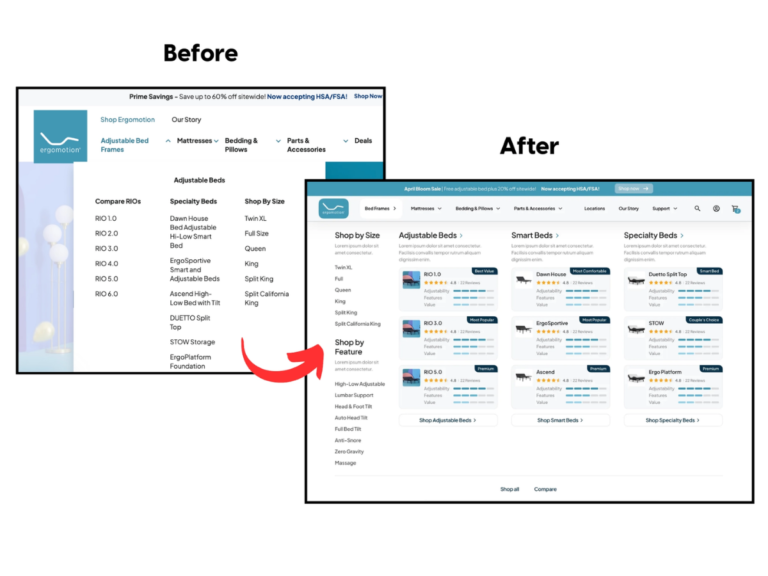
That list became the spine of the Ergomotion plan: “adjustable beds” as the hub, and sleep apnea, side sleepers, and zero gravity as the spokes. The condition pages started ranking for searches the brand had never touched, and Google Search sales rose 102% over the following twelve months. The broad term “adjustable beds” came last, after the spokes had carried the site there.
Can You Target Both on One Store?
Yes, you can target both short-tail and long-tail keywords on one Shopify store, and each type has its own page, and the two page types feed each other when you link them. The collection page holds the broad term. The product pages and posts under it hold the specific phrases and link up to the collection.
So the map has two rules, and every page on the store follows one of them:
- Short-tail terms go on collection pages, where a broad search meets a broad page of products, and each collection links down to the posts and products under it.
- Long-tail terms go on product pages and blog posts that answer one specific need, and each of those links back up to the collection it supports.
That up-and-down linking is the split I lay out in collection pages vs blog posts, and it is what makes the whole group climb together instead of one page at a time. A long-tail post with no link to its collection is a sale for the post and nothing for the store.
Over time the specific pages pass relevance and link strength back up to the broad one. That is how a store that could not touch “sunscreen” at launch ends up ranking for it two years later, and it is the only route I have seen work without buying links.
Which Should You Pick?
Pick long-tail keywords first if your store is under two years old, gets fewer than 5,000 organic visits a month, or sells in a category with a national retailer on page one. Those pages will make sales while the short-tail pages wait on authority.
Pick short-tail keywords as the target for a collection page only once the long-tail posts under it are ranking and linking up. Until then the collection page is a home for the spokes, not a keyword bet.
Pick both, on purpose, the moment you have more than one page type to fill. Every keyword should land on the one page that can rank for it and convert it, and one page targets one primary keyword with a few variants riding along. A broad word on a product page cannot rank, and a specific phrase on a collection page cannot convert.
That mapping is the first thing I build in my Shopify SEO services, before any page gets written, because a keyword on the wrong page is months of work that never shows up in orders. Exclusive Beauty Club’s sunscreen cluster is the clearest example I have: a hub page for the broad term, one post per skin type underneath it, and 207 clicks became 6,000 in a year with the acne post at #1 above Ulta and Sephora.
Ready to Map Your Keywords to the Right Pages?
Long-tail keywords win more sales for most Shopify stores because they carry the buyer’s intent and are far easier to rank for, while short-tail terms set the category and build the collection pages that carry the store later. Chasing broad words alone is how new stores stall for months with nothing to show for it. The stores that grow use both, matched to the right page, and let the specific pages lift the broad ones.
If you want that keyword map built around pages that convert, book a call and I will pull your Search Console and show you the twenty long-tail phrases your store is already getting impressions for and not ranking on. If you want the pages written and live too, that is what my Shopify SEO services are for.