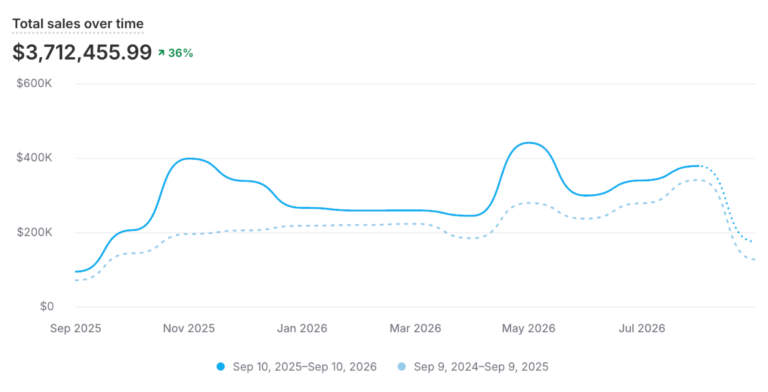
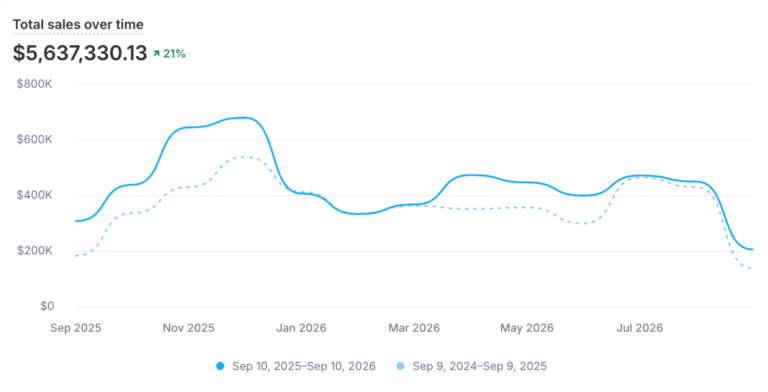
Fieldsheer SEO + AI Case Study: 9 Steps to +138% Google Sales
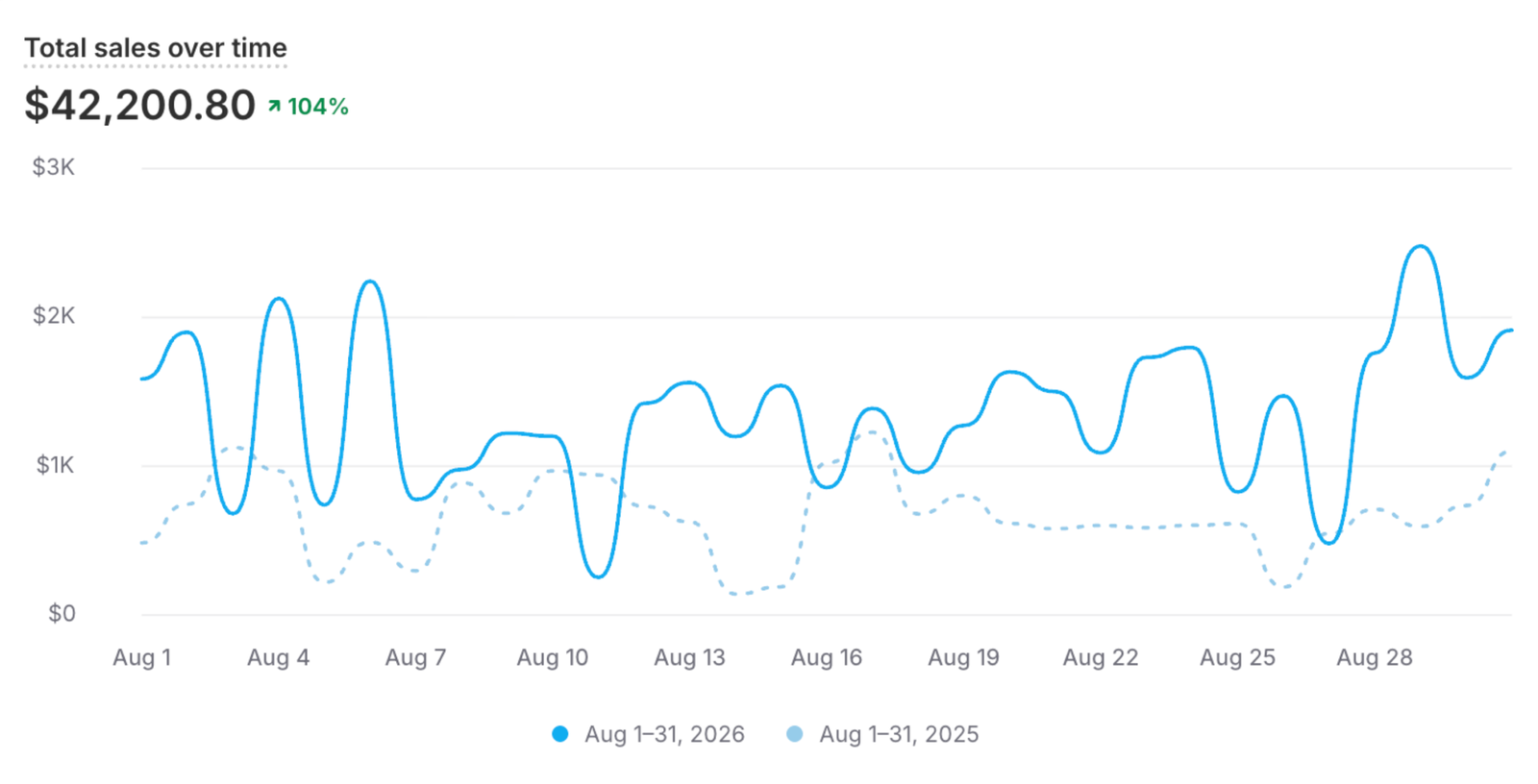
This Fieldsheer SEO case study could be one Shopify screenshot, but that wouldn’t help you.
Once you see the process, you’ll understand why the results keep stacking.
Key Points
| Milestone | Result | Timing |
|---|---|---|
| Google ranking | #1 for “best heated jackets for women” | Within 2 weeks |
| AI Overview | Cited in Google’s AI answer | Same window |
| Travel + Leisure | Named Fieldsheer Best Overall for Women | March 2026 |
| ChatGPT | Fieldsheer named the #1 pick | Spring 2026 |
| Total sales | $20.7K to $42.2K, +104% YoY | August 2026 |
| Google Search sales | $2.6K to $6.4K, +138% YoY | August 2026 |
1. Let Google Pick the Keyword
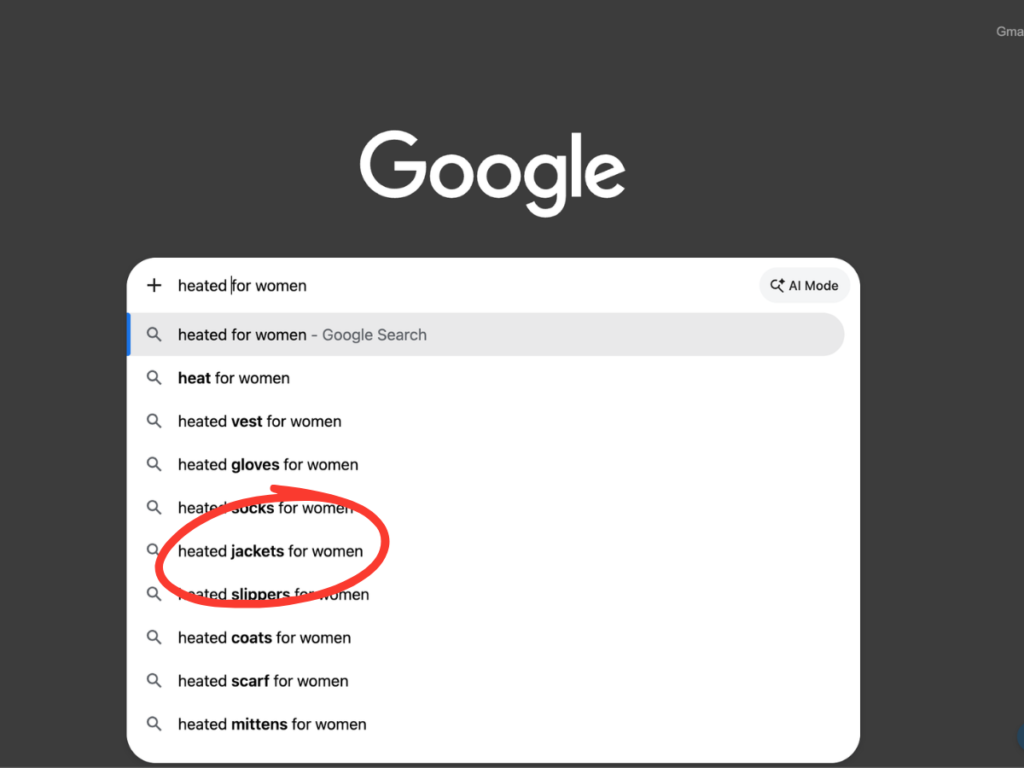
Most people start keyword research by opening a paid tool.
I start by opening Google.
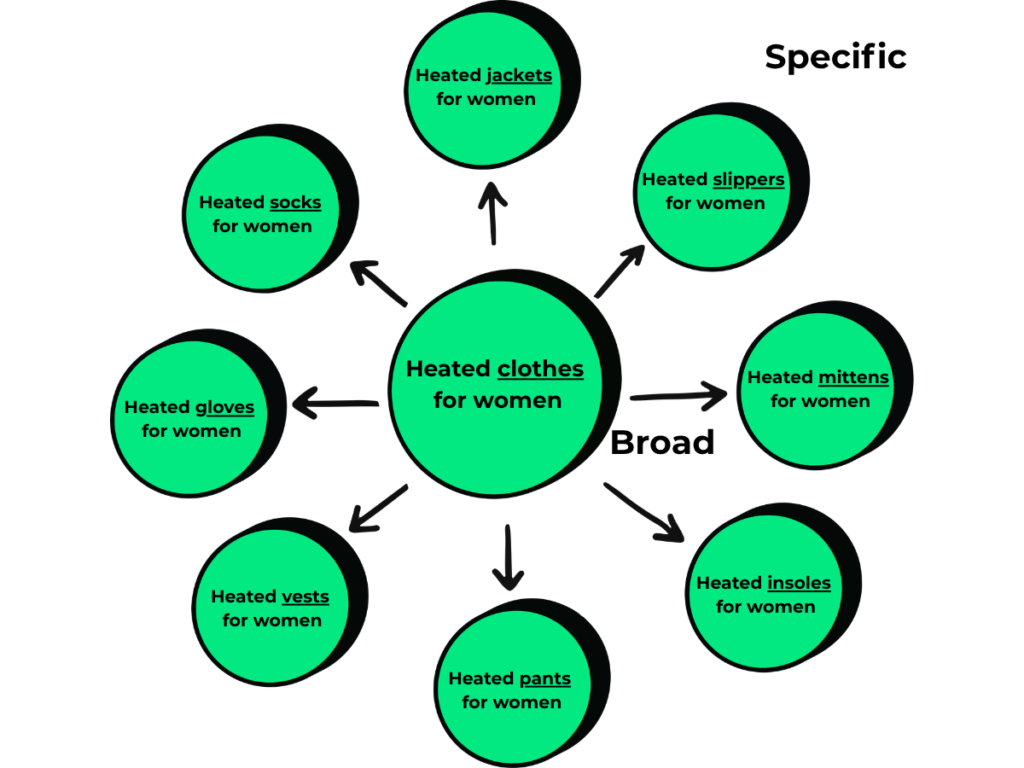
Type “heated ___ for women” into the search bar and stop. Look at what autosuggest hands you. Vests. Gloves. Socks. Jackets. Slippers. Coats. That’s not a guess from a tool that scraped data six months ago. That’s Google telling you, in real time, what people actually type.
That list became the plan. “Heated clothes for women” is the hub. Jackets, socks, gloves, and vests are the spokes. Cover the whole category and you build the kind of authority that separates keywords that drive sales from keywords that just drive traffic.
Then there’s the format. “Best [products] for [use case].” It’s the question a shopper types when they’ve already decided to buy and just want to know which one. It’s also the exact question people ask ChatGPT and Gemini.
So write the listicle a shopper wants before they ask an AI for it. You rank for it and train the models on your answer at the same time.
2. Build What Customers Actually Want
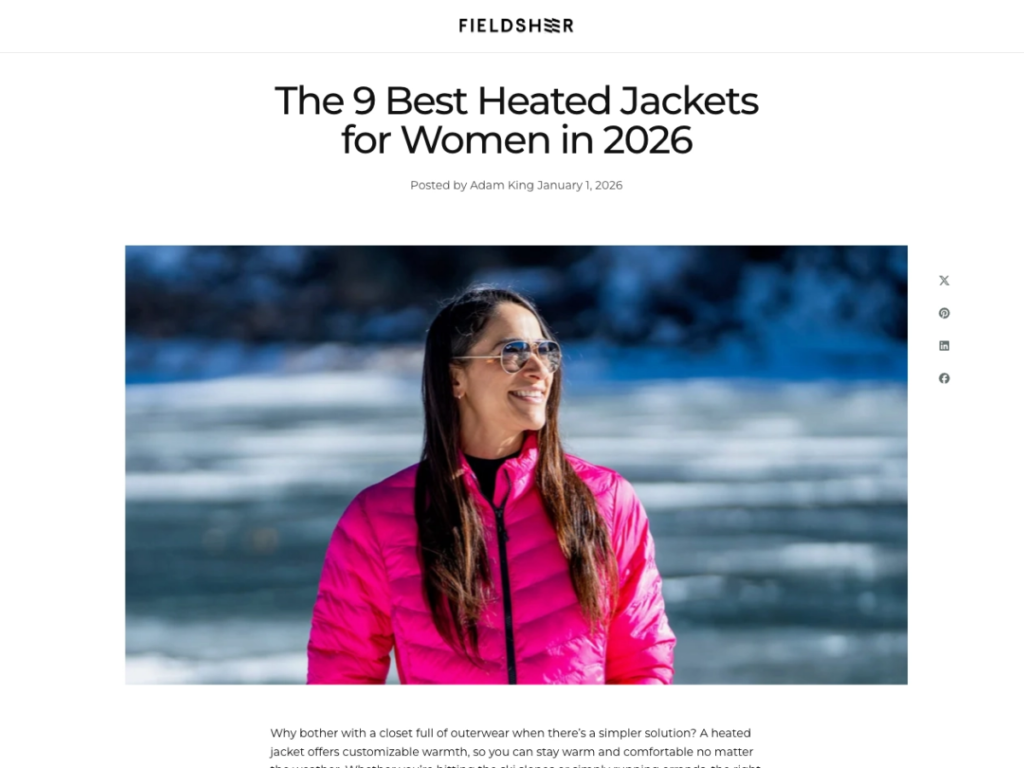
The post was “The 9 Best Heated Jackets for Women in 2026.” Published November 13, 2025.
I could have taken nine product descriptions, shuffled the words, and hit publish. Plenty of brands do. It doesn’t work.
Instead, everything in this post was original. Google’s own guide to helpful, people-first content asks a simple question: does this page show first-hand knowledge and give someone a complete answer? That was the bar.
I also wrote it in second person at an 8th grade reading level. Not because shoppers can’t read. Because that’s the level that keeps people on the page, and time on page is a signal both Google and the LLMs watch. Every jacket got a plain-English answer to “who is this for and why.”
Then I connected it. Each jacket linked to its product page. The post linked to the related collection pages. Now a shopper can move from research to checkout without a dead end, and crawlers and AI models can see which pages matter. If you’re wondering where a post like this belongs next to your category pages, I break that down in collection pages vs. blog posts.
3. Make It Easy to Buy
Tons of blogs can rank. Fewer drive visitors. Even fewer drive sales.
So I built the buying into the post itself:
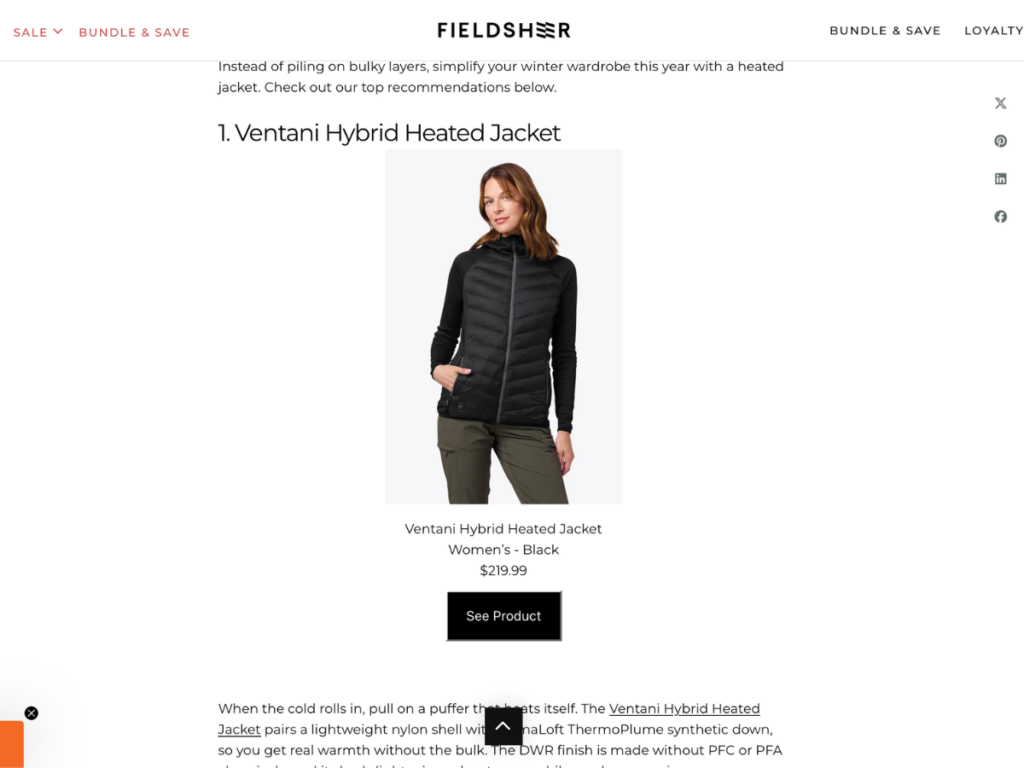
- Real product images under every heading, so it reads like a buying guide instead of an article
- Bullet points for specs and features, so someone can skim nine jackets in under a minute
- A CTA button with the price right under each image, so nobody has to hunt for the cart
Put the price and the buy button inside the blog post. Most brands bury the link at the bottom or leave it out entirely. Every jacket here was one click from checkout.
4. Rank #1 on Google in 2 Weeks
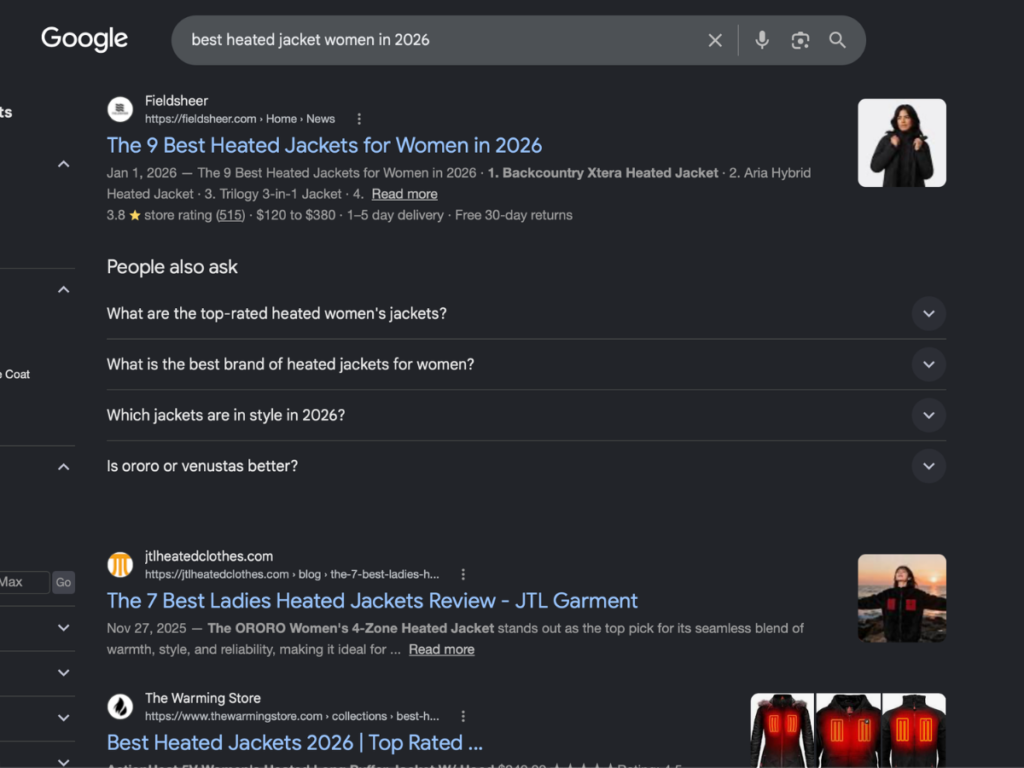
Two weeks after publishing, the post was #1 on Google for “best heated jackets for women.”
It also landed in the AI Overview, the summary Google now stacks above the organic results.
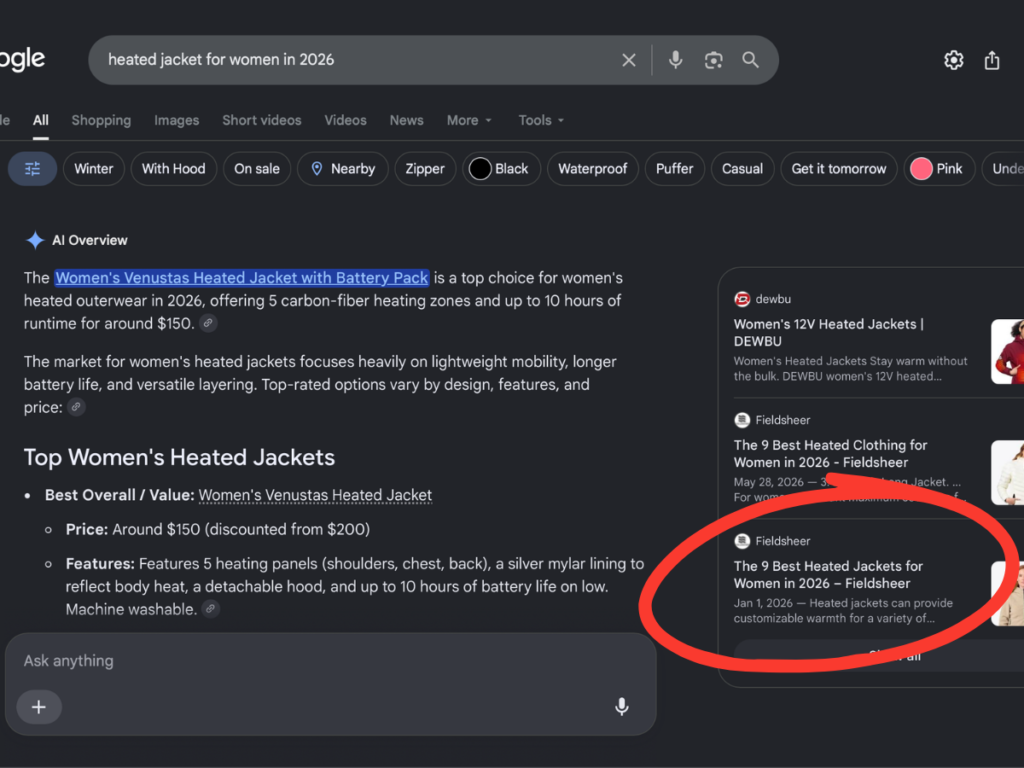
I published November 13 on purpose, a few weeks before winter demand hits, so it was already ranking #1 by the time December and January searches for heated jackets peaked.
Publish seasonal content 1-3 months before demand peaks. Google needs time to index it, and you want it already sitting at #1 when the shoppers show up. Seasonality is baked into every content calendar I build.
The AI Overview didn’t need a separate trick. Same fundamentals, same post. If you want to understand how a #1 ranking, an AI Overview, and a ChatGPT answer relate to each other, my guide to SEO vs. AEO vs. GEO walks through all three.
5. Backlink With 0 Outreach
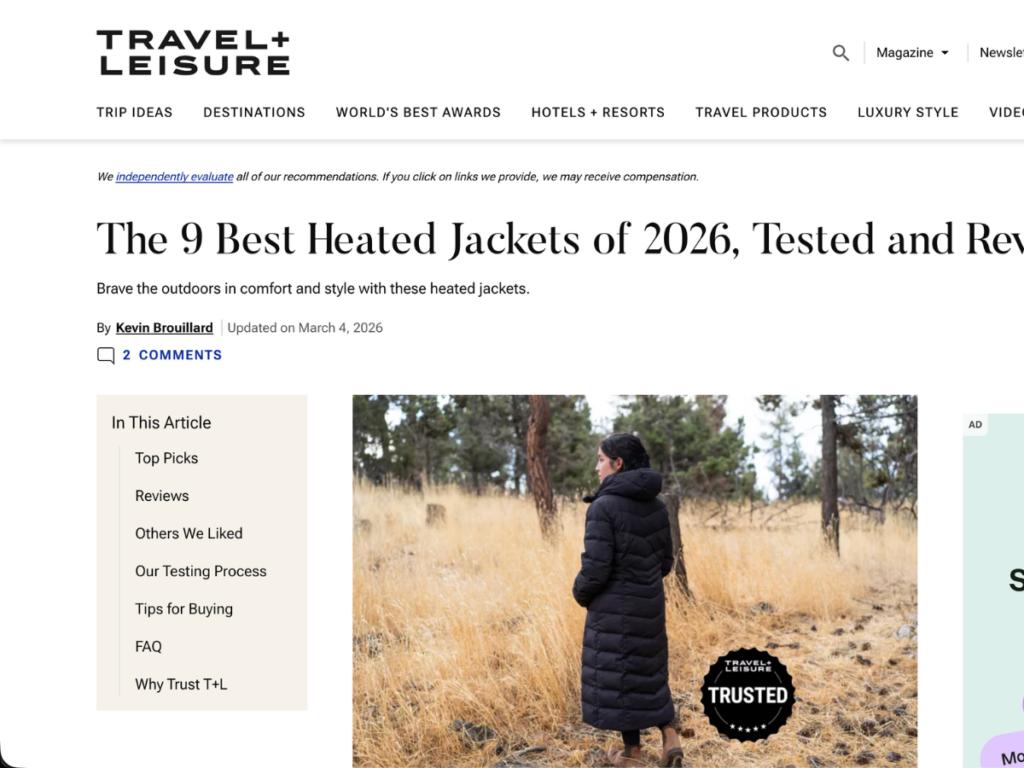
In March, Travel + Leisure published “The 9 Best Heated Jackets of 2026, Tested and Reviewed.”
Best Overall for Women? The Fieldsheer Ventani Hybrid Heated Jacket.
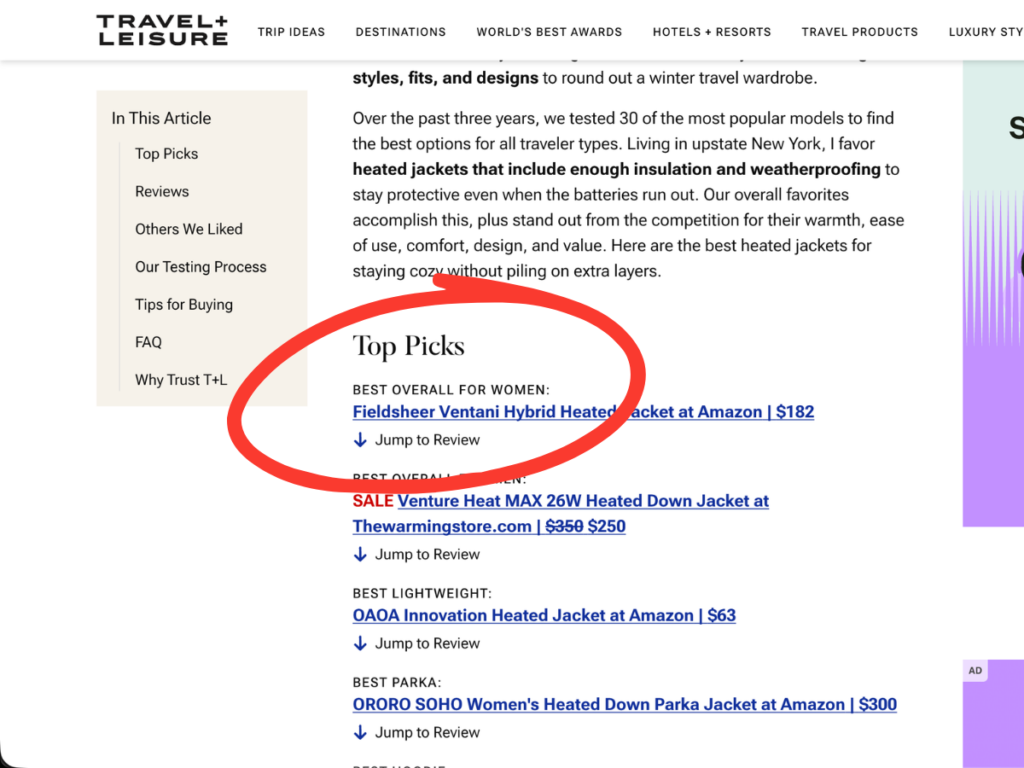
I didn’t send a single email to make that happen.
Think about how their writer researched the piece. He went to Google. He searched for the best heated jackets. The first result was a Fieldsheer post that had been sitting at #1 all winter. That’s the whole story.
This is why I tell every client not to buy backlinks. Most backlink services sell placements on sites nobody reads, and Google’s spam policies treat paid links that pass ranking signals as link spam. You’re paying for something that gets ignored at best.
One link from Travel + Leisure is worth more than a thousand of those. It’s a real editorial vote, and the only way to earn it is to be the answer when they go looking.
6. Become ChatGPT’s Top Pick
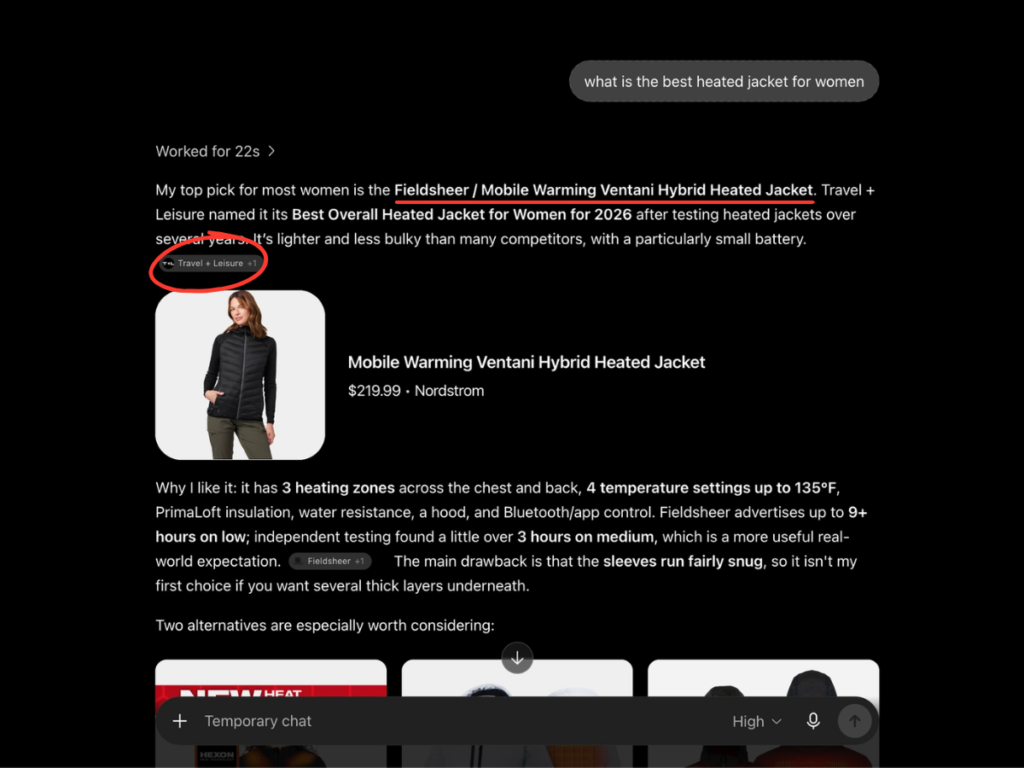
Ask ChatGPT “what is the best heated jacket for women.”
Its top pick is the Fieldsheer Ventani Hybrid. Its sources are Travel + Leisure and Fieldsheer’s own post.
No AI hack put it there. ChatGPT saw a #1 Google ranking, an AI Overview citation, and a top pick from a publication it trusts, and it found consensus. Consensus across sources is the strongest signal an LLM has, and it’s the core of how to rank in ChatGPT.
Here’s why you should care. More shoppers now start in ChatGPT, then go to Google to compare and buy. If you rank #1 on Google, you’re already most of the way to ranking in ChatGPT, because the models lean on the same sources Google does. Win the search result and the AI answer tends to follow you there.
7. Cover Every Spoke in the Hub
The heated jackets post is the example because you can trace it end to end. But it’s one of dozens I ran through these same steps. Every spoke in the hub got its own post, its own seasonal timing, its own internal links. That’s how the authority compounds across the whole category instead of sitting on one page.
8. Get the Store Ready to Take the Order
The pages that actually take the order got the same treatment. I rewrote the product and collection pages around the keywords the blog posts point to. A shopper lands on the post, and there’s a matching page ready to sell to them. Google sees a complete cluster instead of a lonely article.
And underneath all of it, site quality. Technical issues cleaned up. Broken links and redirects fixed. Metadata tightened across the site.
Content only works as well as the site it sits on. The blog wins in this case study happened because the store was already in shape to hold them.
9. Grow Sales 104%
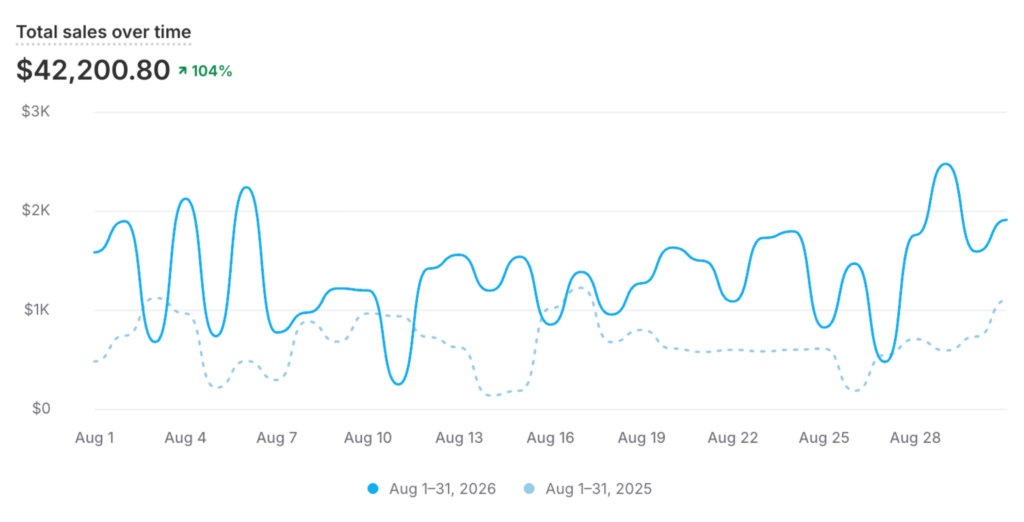
August 2026 vs. August 2025 in Shopify:
| Metric | Aug 2025 | Aug 2026 | Change |
|---|---|---|---|
| Total sales | $20.7K | $42.2K | +104% |
| Sales from Google Search | $2.6K | $6.4K | +138% |
| Orders | 350 | 525 | +50% |
| Average order value | $63 | $86.53 | +37% |
Total sales doubled, from $20.7K to $42.2K. Sales from Google Search grew 138%, and average order value climbed 37% at the same time.
That last number is the one I’d point you to. It’s what happens when the people landing on your site already know which jacket they want.
Want the Same Playbook for Your Store?
Every step here set up the next one. The keyword research picked the target. The post ranked because it was helpful. The ranking earned the backlink. The backlink plus the ranking produced the ChatGPT answer. No paid links, no schema hacks, no AI tricks. Just the fundamentals, done well, in the right order.
If you run a Shopify or ecommerce brand and want this done for your category, book a call with me. I’ll show you which keywords to go after first and what it’ll take to own them.