
Shopify Navigation SEO: How Menus Decide What Ranks
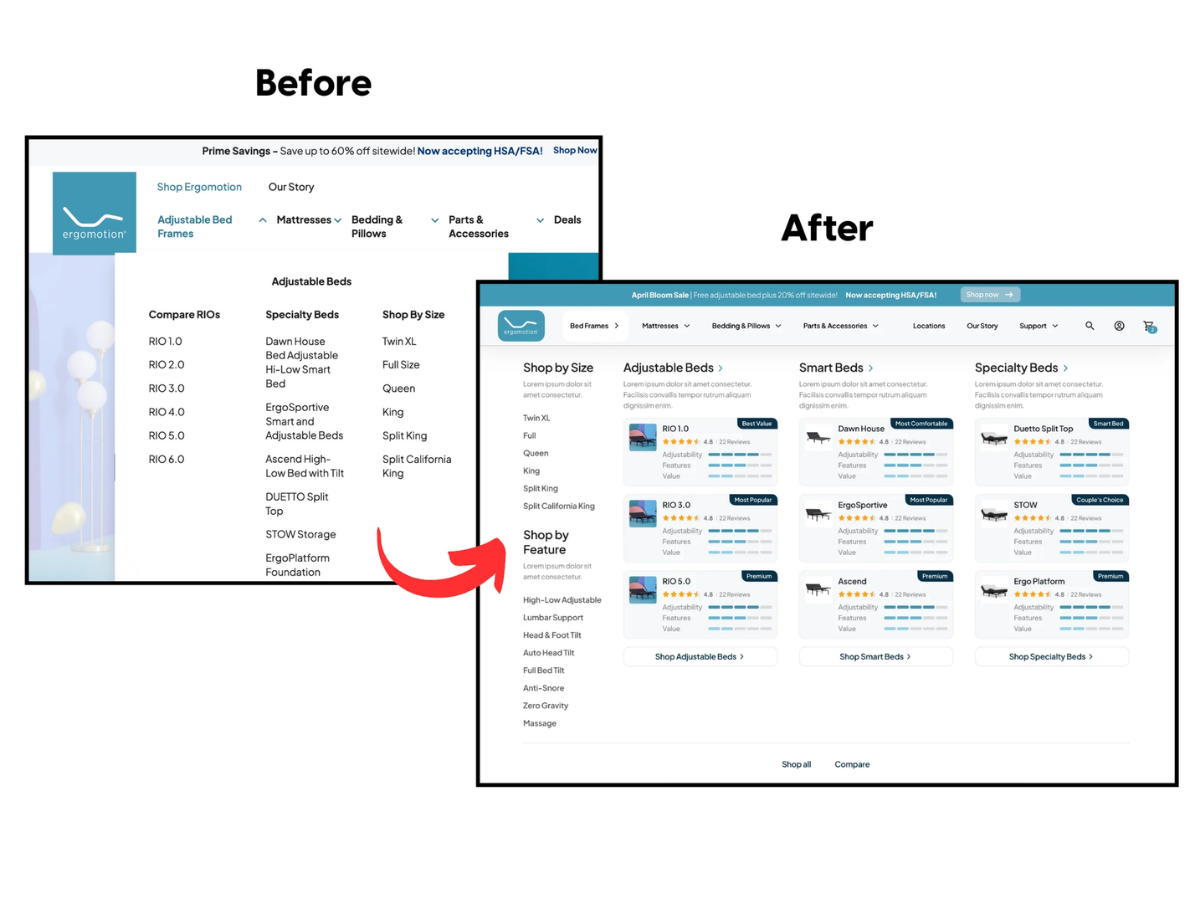
Your Shopify navigation menu decides what ranks because every page it links gets a vote of importance from every page on the store. Google says more internal links make a page look more important, and nothing hands out links like a sitewide menu. Your main menu collections are the pages you chose to rank.
Key Points
- Google’s ecommerce guidance: link menus to categories, categories to subcategories, and subcategories to products, with real anchor tags.
- The more internal links a page has, the higher its relative importance, and menu links repeat on every page.
- A Zyppy study of 23 million internal links found pages with 40 to 44 inbound internal links earned about 4x the clicks of pages with almost none.
- Click depth from the homepage matters more to Google than URL structure, per John Mueller.
- Baymard found 58% of desktop sites have mediocre-to-poor navigation, so the bar for winning is low.
How Do Menus Actually Move Rankings?
Menus move rankings by multiplying internal links at scale, which is exactly how Google says importance flows through a store. Google’s ecommerce structure documentation says more internal links mean higher importance, and a main menu link repeats on every page, so the menu is a megaphone for the pages it names. It even prescribes the shape: menus to categories, then subcategories, then products.
The effect is measurable. Zyppy’s study of 23 million internal links found pages with 40 to 44 inbound internal links earned roughly 4x the Google clicks of pages with fewer than five, with sitewide navigation links showing real power on established sites.
Distance matters too. John Mueller has said click depth from the homepage signals relevance more than URL structure, so a collection one click from home is a collection you have flagged as important.
What Should Actually Be in the Menu?
The menu should hold the pages you want to win money searches, which is almost always your collections. Shopify’s menu system links to products, collections, pages, and posts, and most themes support two levels of dropdowns. The winning pattern: top slots for major collections, nested subcollections, keyword-named.
- Name menu items with the search term, “Waterproof Jackets” not “The Storm Shop”, since anchor text tells Google what the page is about.
- Give every money collection a menu spot, because a collection outside navigation is competing while buried.
- Use real link items, never placeholder headers, for anything you want crawled, and keep tag-filtered URLs out entirely.
- Add breadcrumbs, which Google uses to categorize pages and shoppers use to climb back up.
Two levels is also a crawl rule, not just a theme limit. Google reads links from real anchor tags, and menu items built as JavaScript events without href attributes are invisible to it.
What Mistakes Waste the Menu’s Power?
The mistakes that waste the menu’s power come down to spending the votes on pages that cannot rank or do not sell. Every menu slot given to a thin page, a tag-filtered URL, or a “Shop All” dumping ground is authority not given to a collection with real search demand, and it is a classic mark of a store that isn’t ranking despite decent products.
The other classic is menus that read like the org chart instead of the search results. Baymard’s navigation research rates 58% of desktop sites mediocre to poor on navigation, with test shoppers abandoning sites over menu labels they misunderstood. Internal brand names for categories confuse crawlers and customers identically, and neither one asks for a translation before leaving.
The symptom of a wasted menu is a store where the wrong pages rank: the homepage for everything, or a blog post outranking the collection it should feed. Stores routinely bury their best category three clicks deep while linking a sale page sitewide, and the rankings follow the burial.
How Do You Restructure Without Breaking Things?
You restructure without breaking things by changing the menu, not URLs. Menu edits in Shopify swap links without touching addresses, so no redirects to manage, and behavior data shows within weeks if shoppers find things faster. Plan on paper: rank collections by revenue and demand, give top performers the top slots.
The list rarely matches the current menu, which is the point of writing it down. Promote no more than your theme handles gracefully, and let subcollections nest under their parents. A menu of six strong categories beats a mega menu of forty weak ones, both for the authority math and for the shopper scanning it on a phone.
Then watch Search Console for the promoted collections over the next month, comparing impressions against the month before the change. Impressions rising on the pages you elevated is the menu doing exactly what this post promised, and it costs nothing but the edit.
The Menu Is a Ranking Decision
Shopify navigation SEO is recognizing that your menu distributes importance: every slot is a sitewide vote, keyword-named anchors tell Google what pages mean, and click depth from the homepage flags what matters. Put your money collections one click from home, keep thin pages out, add breadcrumbs, and let the menu vote for the pages that pay you. Most stores never think about this at all, which is precisely the size of the opportunity.
I help Shopify brands stop renting their customers from Meta and Google by building search and AI visibility that keeps sending buyers after the ads turn off. If you want your navigation mapped against your revenue and rankings, my SEO services include that restructure.
