Topic Clusters vs Keyword Lists: Which Works for Ecommerce?
Topic clusters work better than keyword lists for ecommerce because a cluster ties a collection page and its posts together so the whole group ranks. A keyword list alone gives you one-off posts that compete with each other. You still need the list: research keywords first, then group them around your money collections.
Here is why lists fail and what a working cluster looks like.
What Is the Difference Between a Keyword List and a Topic Cluster?
The difference between a keyword list and a topic cluster is that a keyword list is exactly what it sounds like, a list, while a cluster is a plan. You export a few hundred terms from a tool, sort by volume, and pick the ones you like, and every term becomes its own post with no plan for how the posts relate. It is research, not a strategy, and that difference explains most of the blogs I see that get no traffic.
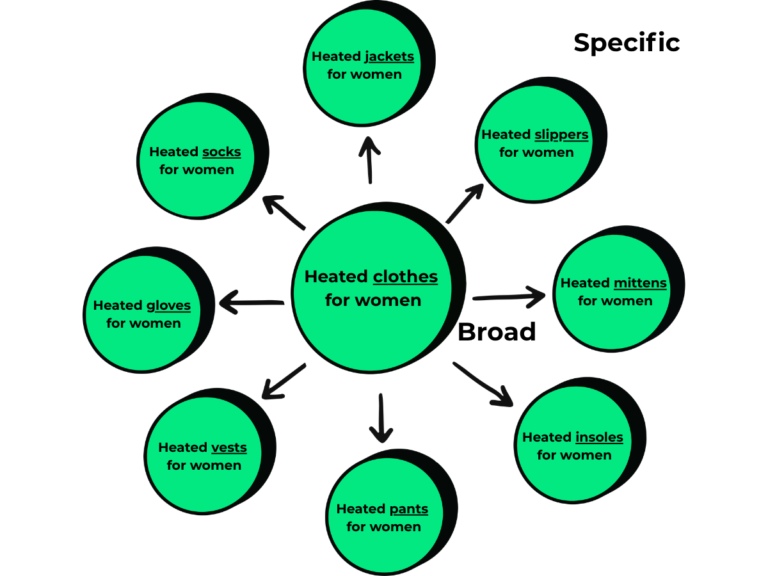
A topic cluster takes that same list and groups it by intent. One page becomes the hub, which for a Shopify store is almost always a collection page, and the rest become supporting blog posts (spokes) that answer the questions people ask before they buy. If you need help deciding which terms deserve a hub, start with the keywords that drive sales rather than the ones with the biggest volume numbers.
The two are not rivals. The list is the raw material and the cluster is what you build out of it. HubSpot’s original topic cluster research found that the more internal links they added between related pages, the higher those pages climbed, which is the mechanism a keyword list alone never triggers.
Why Do Keyword Lists Fail for Shopify Stores?
Keyword lists fail for Shopify stores because nothing connects the posts. I see it in almost every audit: 40 or 60 posts, each chasing a keyword, most getting zero clicks. Google has no reason to trust the store on any subject, and broad terms get chased when a long-tail keyword with buyer intent would be easier to win.
Here is what keyword-only blogging does to a store:
- Cannibalization. Three posts on “best sunscreen for face”, “top face sunscreens”, and “face sunscreen guide” split one keyword three ways and none of them rank.
- Orphaned posts. Each post links to nothing but the homepage, so it sits alone with no internal link equity coming in.
- No lift for collections. The pages that actually sell product never get links from the blog, so blog traffic never turns into revenue.
- Wasted budget. You pay for 60 posts and get the results of 10.
- No authority signal. Google sees random coverage, not a store that knows sunscreen inside and out.
The list is not the villain here. The problem is stopping at the list. Keywords without grouping create competition inside your own site, and that is worse than having fewer posts.
What Does a Topic Cluster Look Like for a Shopify Store?
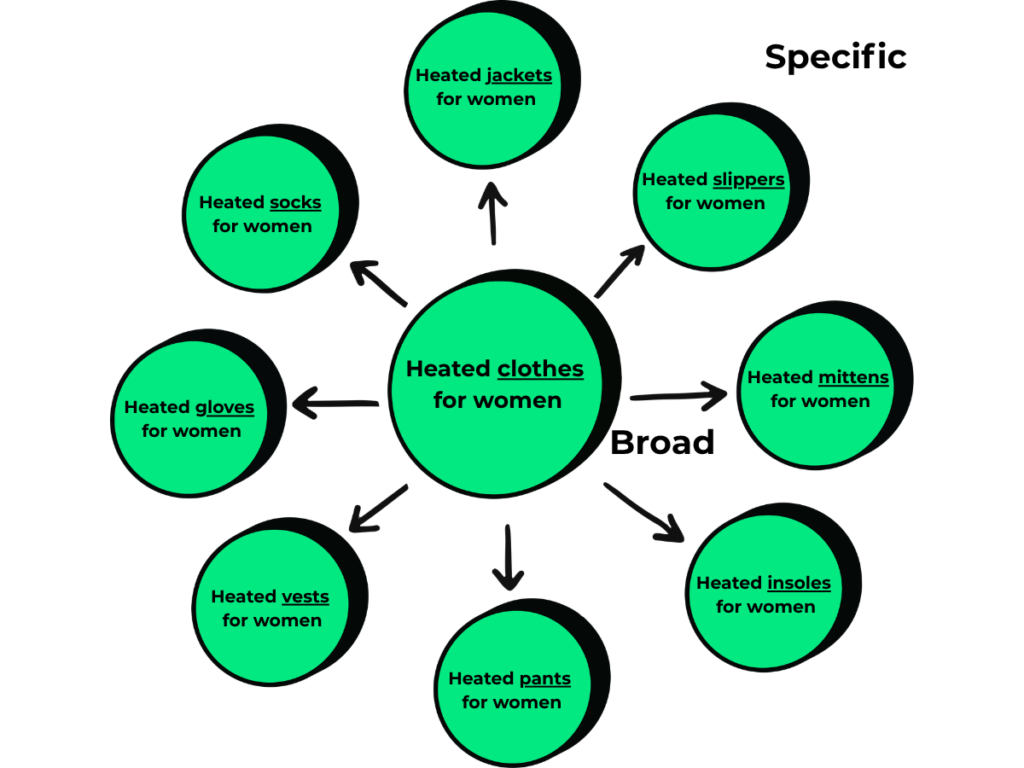
A topic cluster for a Shopify store centers on a collection page. A skincare store selling mineral sunscreen makes the hub /collections/mineral-sunscreen, the page that converts and should rank for “mineral sunscreen”. Shopify’s docs describe collections as how you organize products into categories.
Around that hub you write 5 to 8 spokes that answer pre-purchase questions, like “Mineral vs Chemical Sunscreen: Which Is Better for Sensitive Skin?”, “Does Mineral Sunscreen Leave a White Cast?”, “How Much Sunscreen Should You Put on Your Face?”, “Can You Wear Sunscreen Under Makeup?”, and “Best Sunscreen for Acne-Prone Skin”. Each spoke targets one long-tail question and mentions the products in the collection where it fits naturally. Every spoke links up to the collection with a keyword anchor, and the collection page links down to the spokes in its bottom-of-page content.
The spokes also link sideways to each other where it makes sense, so the white cast post points to the makeup post and the sensitive skin post points to the acne post. Now a reader who lands on any spoke is two clicks from buying, and Google sees six pages that all agree this store is the place for mineral sunscreen. That is the authority a keyword list can never build on its own.
How Do You Build a Topic Cluster From a Keyword List?
You build a topic cluster from a keyword list by sorting it around your collections, not by throwing it away. Start with your top 3 to 5 collections by revenue, since those are the hubs worth defending, and before you write anything new, run the content audit template on what already exists so you can fold old posts into the new clusters instead of adding to the pile.
Then work through this order:
- Pick the hub. One collection page per cluster. If it does not sell, it is not a hub.
- Pull every keyword that belongs to it. Filter your list for terms that mention the product, the problem it solves, or the comparison a buyer makes before choosing it.
- Group by intent. Terms that mean the same thing become one post, not three. “Sunscreen white cast” and “does mineral sunscreen look white” are one spoke.
- Assign one keyword per URL. Each spoke gets one primary keyword and each keyword lives on exactly one page.
- Map the links before you write. Spoke to hub, hub to spokes, spoke to related spoke. Write the anchor text into the outline.
- Write the spokes, then update the hub. Add a short FAQ or buying guide section to the collection page that links to the new posts.
Google’s SEO starter guide puts it simply: links connect users and search engines to other parts of your site, and grouping similar topics together helps Google understand how your site is organized. You can read the full guidance from Google yourself, but the short version is that structure is the ranking signal, and a cluster is just structure done on purpose. Once the first cluster is live, give it 60 to 90 days, watch the collection page’s impressions in Search Console, then repeat the process for the next collection.
Build Clusters, Not Scattered Posts
Topic clusters beat keyword lists for ecommerce because they turn blog traffic into collection page rankings, and collection pages are where Shopify stores make money. A keyword list is still step one, so do the research, then group the terms around your best-selling collections, write the spokes, and link everything together. Three tight clusters beat 60 scattered posts every time.
If you want help mapping your keyword list into clusters and turning your collection pages into hubs that rank, take a look at our SEO services for Shopify stores and let’s build the first one together.