Ergomotion SEO + AI + CRO Case Study: 7 Steps to +36% Sales
This Ergomotion SEO case study starts with the biggest adjustable bed manufacturer in the world, ten million bases sold across 30 countries, and a website Google didn’t know what to do with.
So I rebuilt how the site talks to Google, one layer at a time. Keywords, metadata, pages, navigation, blog, internal links. Seven steps, in the same order I’d run them for you.
Key Points
| Task | Result |
|---|---|
| Metadata sweep | Ascend hits #2 on Google for “hi low adjustable bed” |
| “Shop by” pages + navigation | Hub pages start ranking for size, feature, and condition searches |
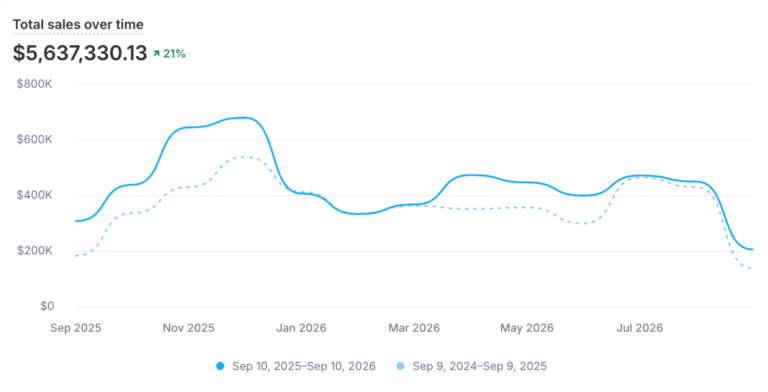
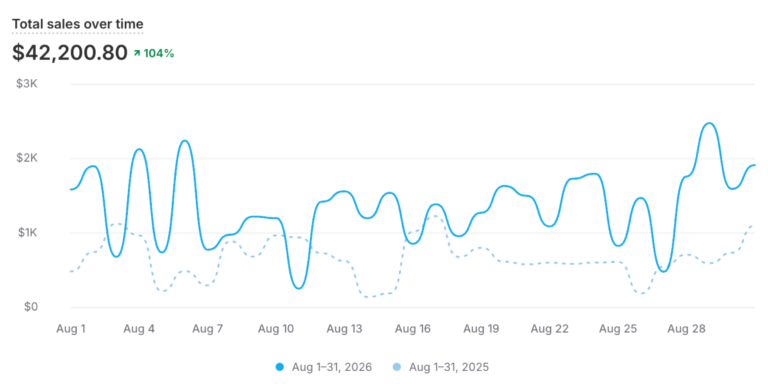
| Peak season sales | Total sales +103%, Google Search sales +139% |
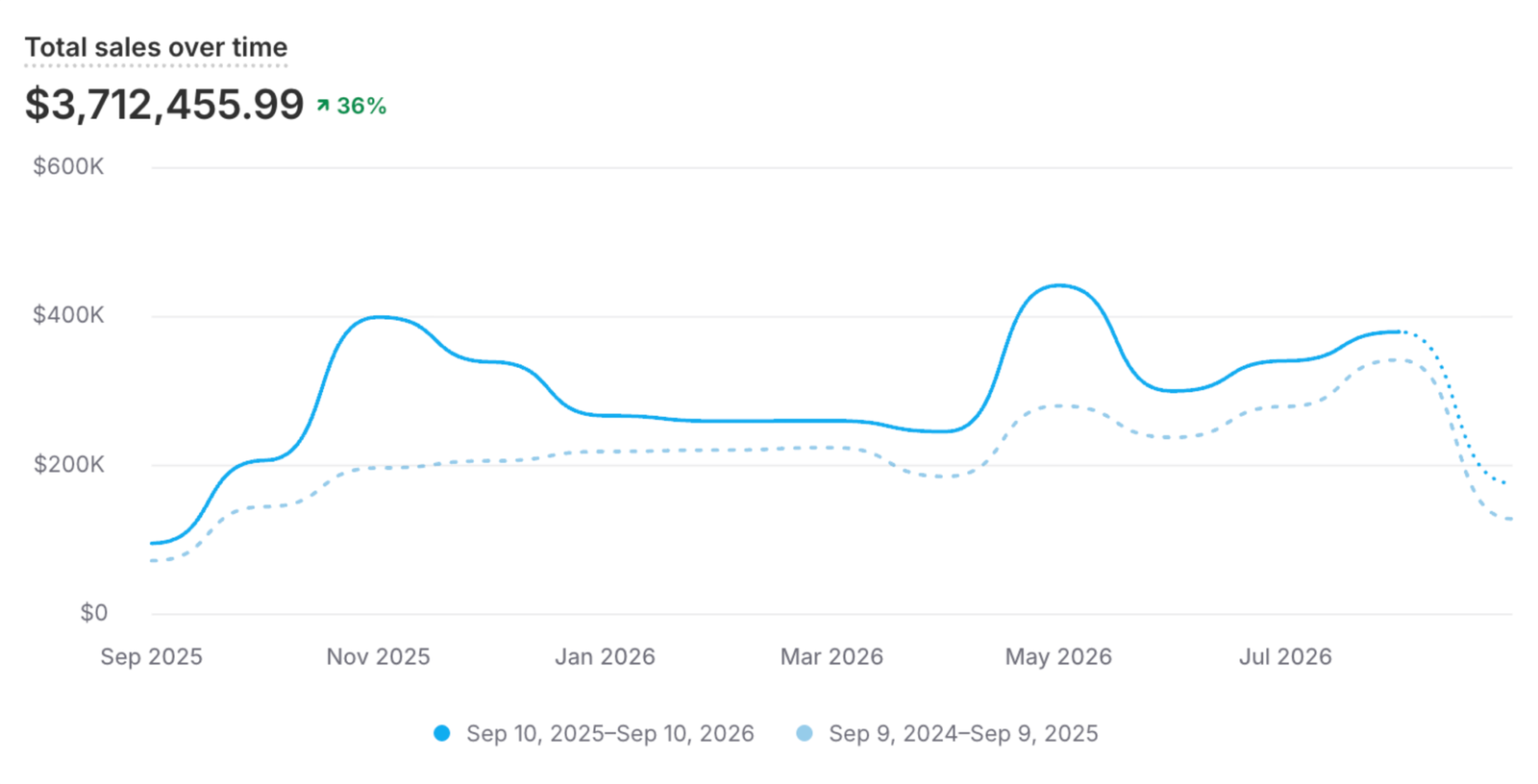
| Last 12 months | Total sales $2.73M to $3.71M (+36%), Google Search sales +102% |
| Acid reflux post | Page 1 ranking, then cited in Google’s AI Overview |
| Sleep apnea post | Cited in Google’s AI Overview |
1. Let Google Pick the Keywords
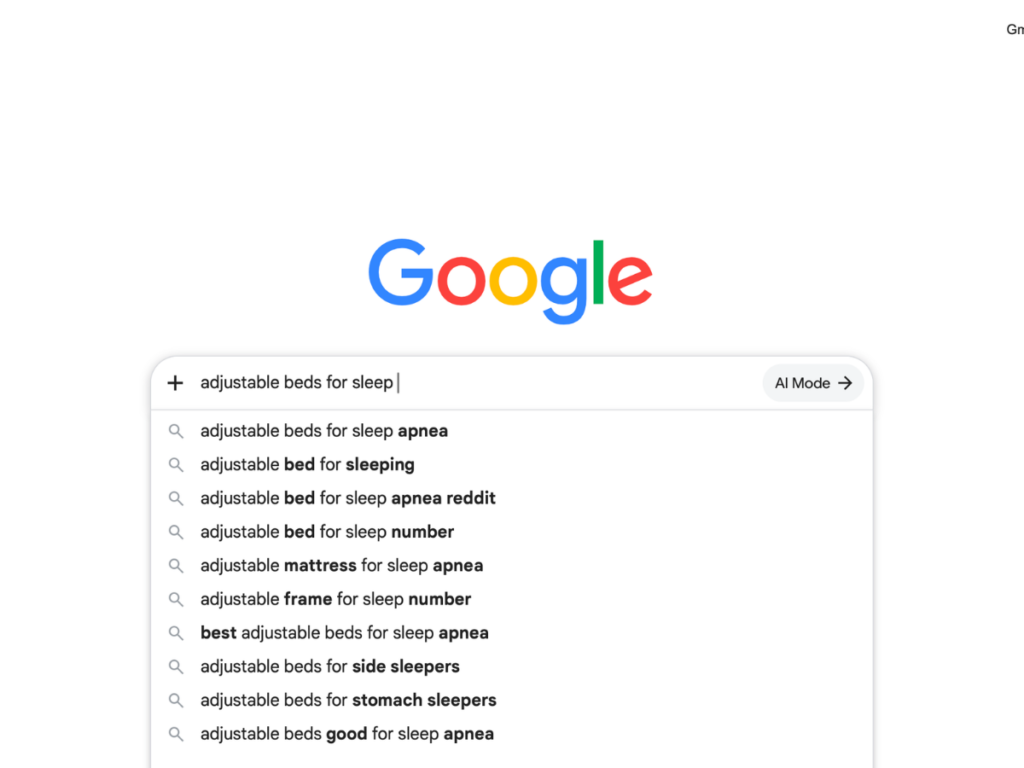
This is the same play I ran in the Fieldsheer case study. Open Google, start typing, and let autosuggest tell you what customers actually search.
Type “adjustable beds for” and stop. Google fills in the rest: sleep apnea, side sleepers, stomach sleepers, seniors. Real searches, ranked by demand, and free. No paid keyword tools required.
Stay relevant, though. Ergomotion sells adjustable beds, so the targets are “adjustable beds,” never “beds.” Ranking for a broad term that brings the wrong shopper is worse than not ranking at all.
Then go bottom of funnel. “Adjustable beds for [use case]” is the money format.
Someone searching “adjustable bed for sleep apnea” has a problem, a budget, and a credit card. That format became the spine of the whole hub and spoke plan: adjustable beds as the hub, and couples, sleep apnea, zero gravity, and every other use case as the spokes.
2. Outrank Hospital Beds With a Title Tag
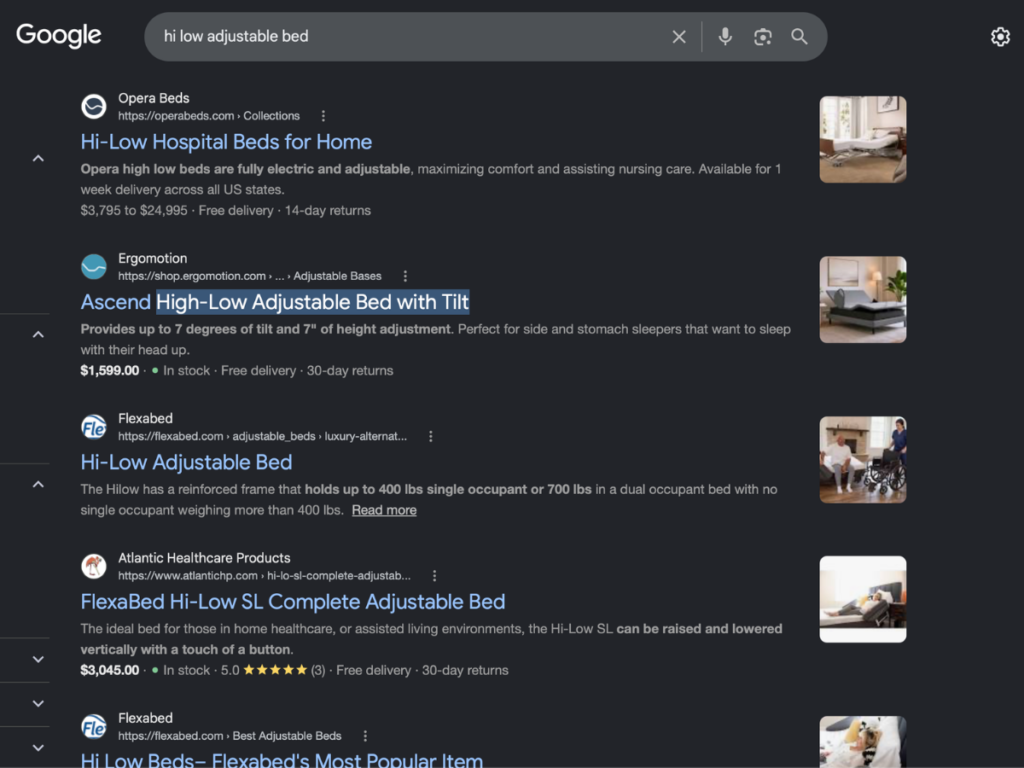
The Ascend is Ergomotion’s high-low bed. It raises and lowers the whole sleep surface, which is exactly what people mean when they search “hi low adjustable bed.”
The product page wasn’t telling Google that. So I rewrote the title tag to “Ascend High-Low Adjustable Bed with Tilt.” Branded product name, non-branded description of what it is.
Now that page sits at #2 on Google for “hi low adjustable bed,” above medical suppliers selling $3,000+ hospital beds. Google’s own title link documentation says descriptive, concise title text is what it wants, and it’s often the main thing a searcher uses to decide what to click.
That’s the formula I ran across the catalog. Branded product plus non-branded descriptor in every title tag.
Then title modifiers like “30-Day Guarantee” to lift click-through, clean H1s that match, and meta descriptions written properly. Descriptions aren’t a ranking factor and Google rewrites them half the time, but they take minutes to fix, so fix them.
3. Sell the Way Customers Shop
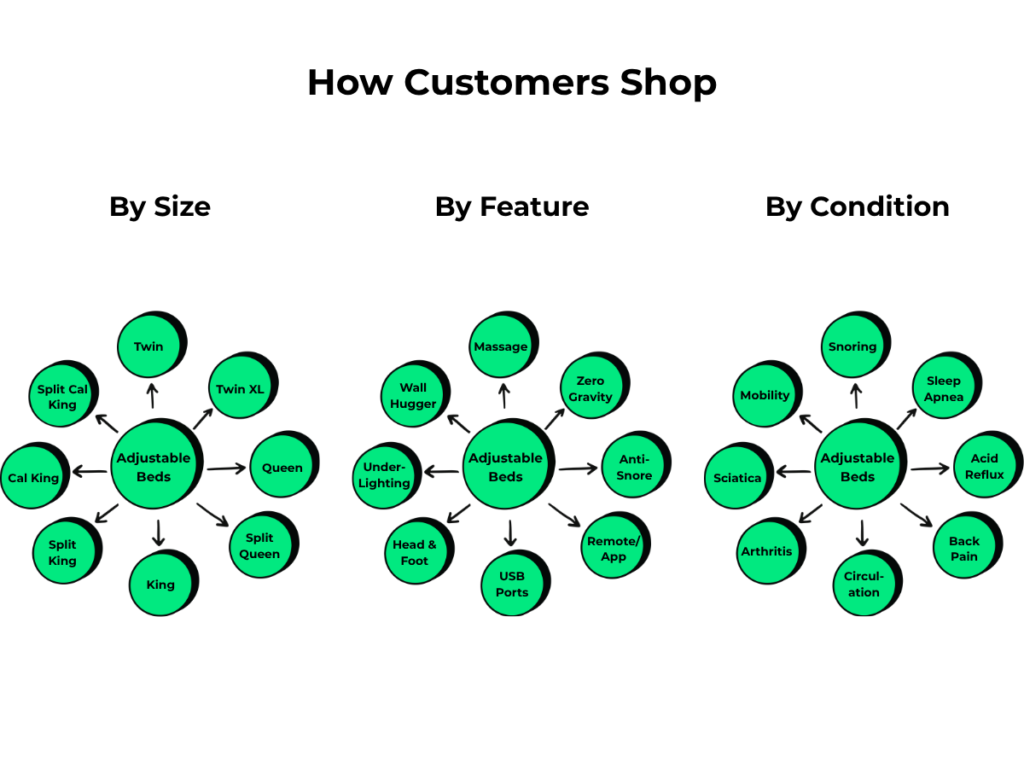
Nobody walks into a store and asks for “RIO 5.0.” They ask for a split king, or a bed with massage, or something for their acid reflux.
But the site was organized by model name. Customers don’t shop by model name. So I expanded the page structure into “shop by” hubs that match how people actually search: by size (Twin XL through Split California King), by feature (zero gravity, massage, anti-snore, high-low), and by condition (sleep apnea, acid reflux, circulation).
Each hub links down to its spokes, and each spoke targets one search. That’s the topic cluster model applied to collection pages instead of blog posts.
Google’s SEO starter guide says organizing a site logically helps search engines understand how pages relate. This is that, built around the customer instead of the catalog.
FAQs went on the pages too. They answer the questions shoppers ask right before buying, and they’re the exact phrasing AI search engines pull from.
4. Turn the Menu Into a Salesperson
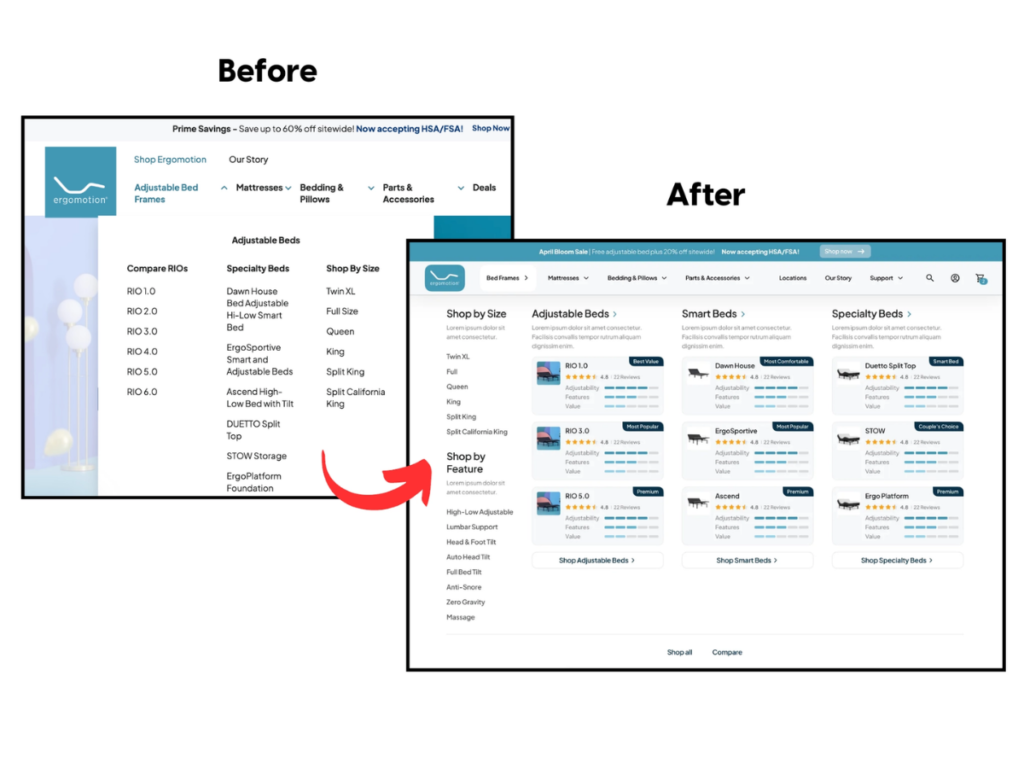
The old menu was a wall of model numbers. RIO 1.0 through 6.0, then a list of names that mean nothing to a first-time visitor.
I rebuilt it around the same “shop by” logic as the pages. Shop by size. Shop by feature. Visual product cards with ratings and comparison bars, so a shopper can compare beds inside the menu instead of hunting through six product pages.
Reviews went in for social proof, and the whole thing was optimized for mobile, where most of the traffic lands. Navigation is SEO, not just design. The menu tells Google which pages matter most on your site. Every link in it passes authority, and a menu built around “shop by size” hands that authority straight to the hub pages you’re trying to rank. I break down how menus decide rankings in Shopify navigation SEO.
5. Get Cited in the AI Overview
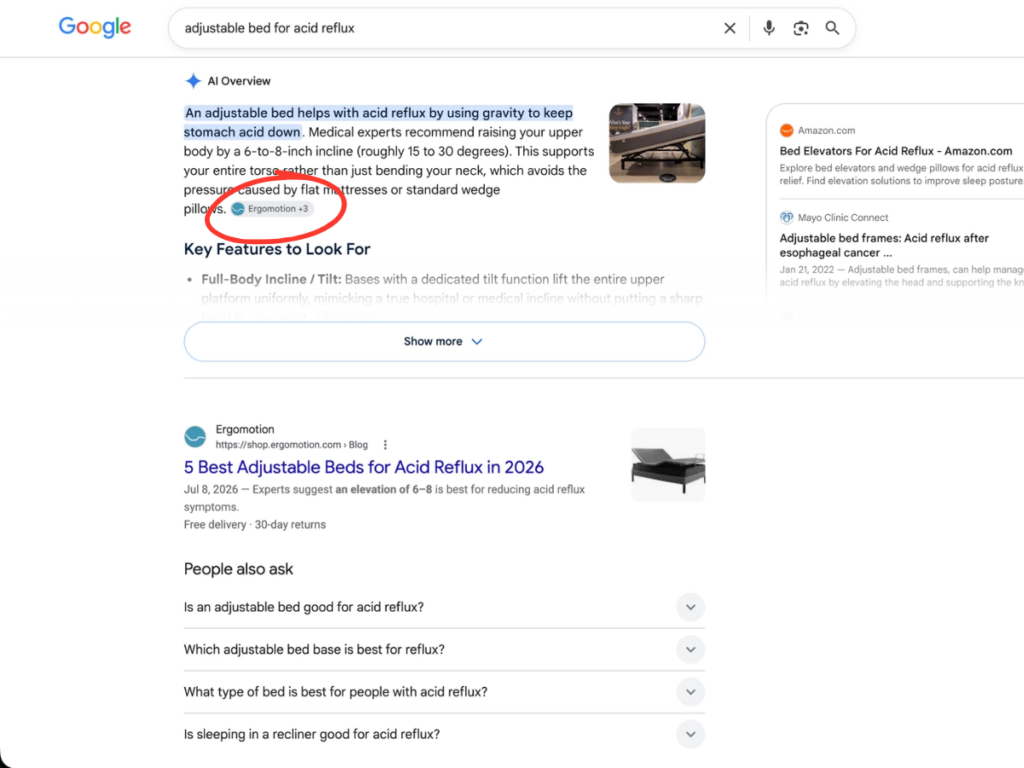
The blog got the same BOFU treatment through 2026, after the rebuild had already proven itself in the sales numbers. “5 Best Adjustable Beds for Acid Reflux.” “5 Best Adjustable Beds for Sleep Apnea.” Posts for shoppers with a problem, not readers with a question.
The acid reflux post ranks on page 1, and Google’s AI Overview for “adjustable bed for acid reflux” cites Ergomotion as a source. Search “best adjustable bed for sleep apnea” and the AI Overview cites Ergomotion there too, with the post sitting in the source panel. Getting your product pages and posts into Google’s AI Overviews is the same work as ranking them, done thoroughly.
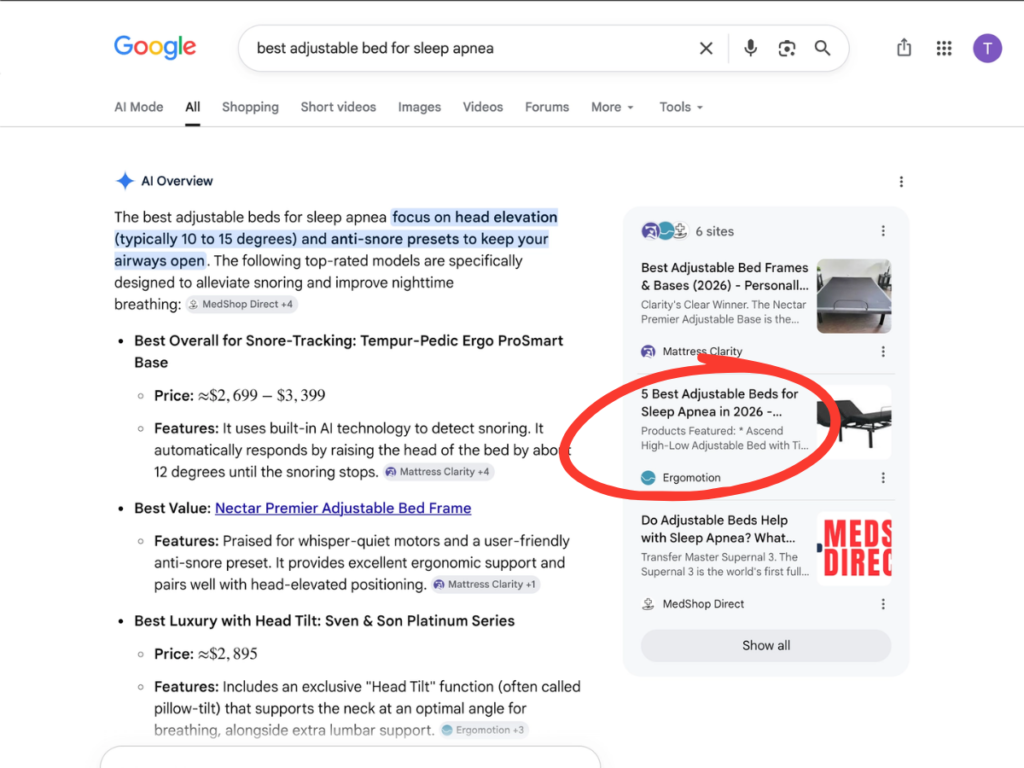
Those posts overlap with the condition collection pages, and I don’t care. Most SEOs will argue with me on that. The overlap is small, and it gives Ergomotion two chances to rank for the same search. Google picks whichever page fits better. A blog post and a collection page serve different moments anyway: one convinces, one converts, and each links to the other.
6. Link the Site Into One Cluster
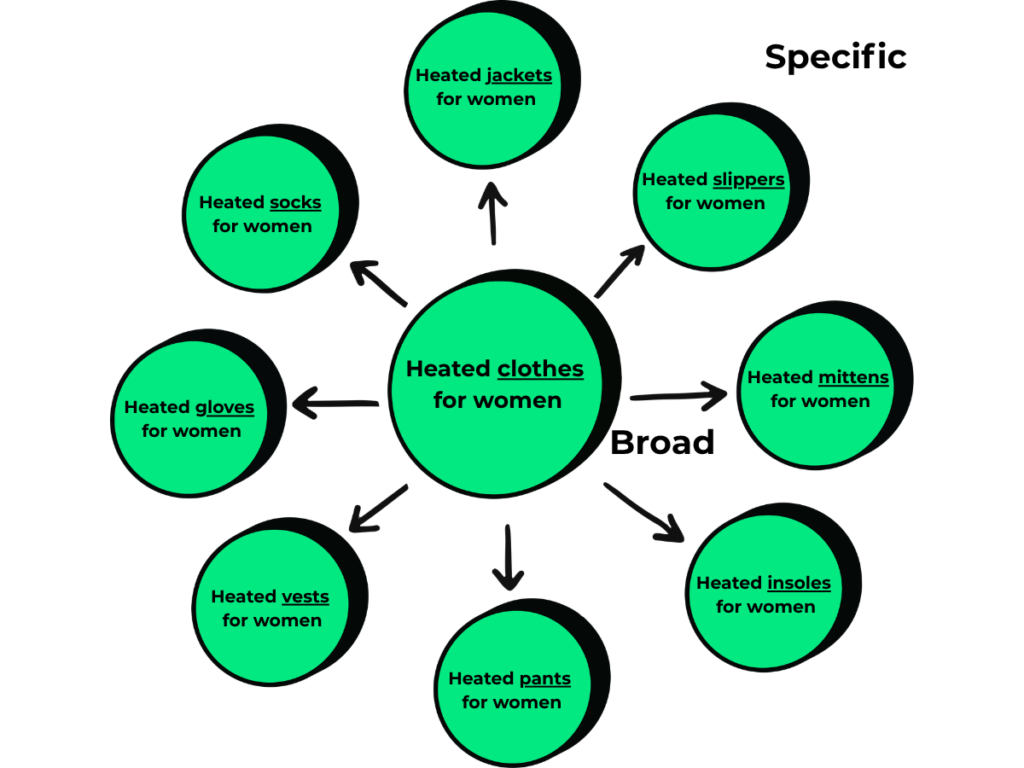
None of the above works if the pages don’t connect.
Every spoke links up to its hub. Every hub links down to its spokes. Blog posts link to the collections they support, and collections link back to the posts that answer the pre-purchase questions. Inlinks and outlinks, both directions, on purpose.
Google’s link best practices say every page you care about needs a link from at least one other page, with anchor text that says what’s on the other end. Anchor text is the label Google reads, so write it like one. “Adjustable beds for sleep apnea,” not “learn more.”
This is the step that makes the cluster a cluster. Without the links, you have 30 pages. With them, you have one site that owns adjustable beds.
7. Grow Sales 36%
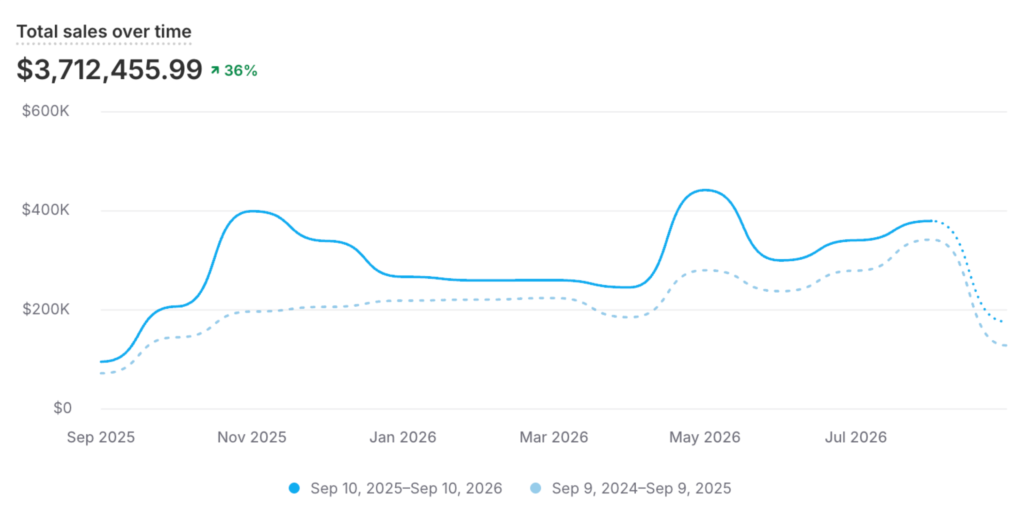
The last 12 months against the year before, in Shopify:
| Metric | Prior year | Last 12 months | Change |
|---|---|---|---|
| Total sales | $2.73M | $3.71M | +36% |
| Orders | 3,808 | 5,141 | +35% |
Total sales went from $2.73M to $3.71M in a year, up 36% on 35% more orders. Sales from Google Search grew 102% in the same window, nearly three times the pace of the store overall.
That gap is the signature of this kind of work. Paid did not do that. A viral post did not do that. The site started showing up where shoppers were already looking, from the title tag to the AI Overview, and the orders followed.
Want the Same Playbook for Your Store?
Seven steps. Autosuggest picked the targets. Title tags put products on page 1. The pages and navigation matched how customers shop. The blog caught the condition searches and the AI Overviews. Internal links tied it into one cluster. Sales followed.
If you run an ecommerce brand and want this run on your catalog, book a call with me. I’ll show you which layer of your site is costing you the most.