
What Are Topic Clusters?
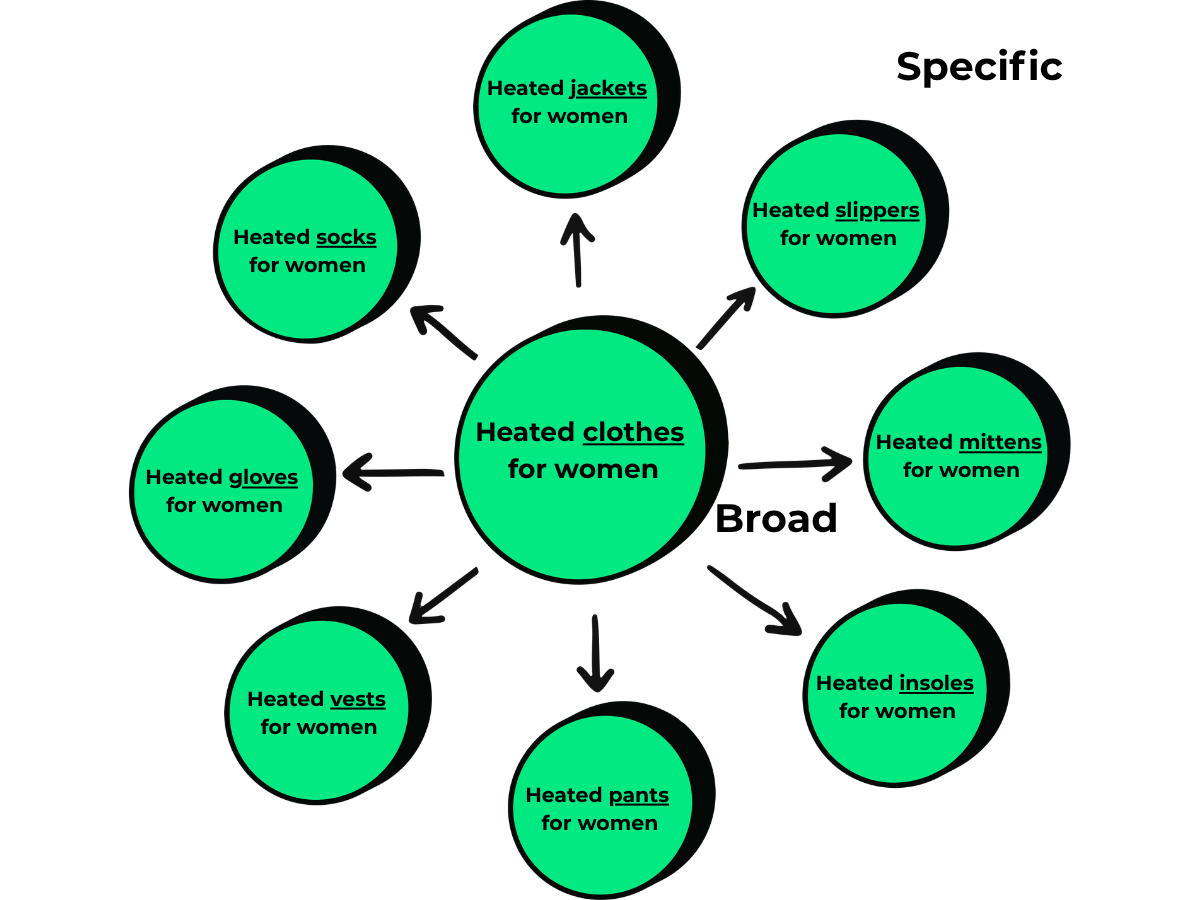
Topic clusters are groups of pages that cover one subject from every angle and link to each other, so Google reads them as one body of work instead of scattered posts. One pillar page covers the broad topic, a set of shorter posts answers the specific questions around it, and the internal links turn the pile into a cluster.
What a Topic Cluster Is
A topic cluster is one pillar page, a set of spoke pages, and the links between them, all on one subject. The pillar is a broad page on the main subject, like a complete guide to running shoes. Each spoke answers one narrow question, like whether running shoes help knee pain.
The links are what make it a cluster rather than a category.
Think of it as a store aisle instead of a bargain bin. A bargain bin has good products in it, but nobody can find the one they want. An aisle puts the running shoes together, labels the shelf, and lets the shopper walk from the general section to the exact pair. Google walks your site the same way, and a cluster is the aisle.
The word “cluster” gets used loosely, so here is the strict version: if a reader can get from the pillar to every spoke in one click, and from every spoke back to the pillar in one click, you have a cluster. If the posts share a subject but not the links, you have a category tag.
How a Topic Cluster Works
A topic cluster works by pooling the strength of many pages onto one subject, so each new page starts with support instead of starting alone. The pillar collects links from every spoke, the spokes borrow trust from the pillar, and Google sees a site that has covered the subject rather than mentioned it.
The Pillar Page
The pillar page is the broad page a beginner would land on first, and it links down to every spoke. It answers the big question in full and points to the narrow answers, so it ends up with more internal links than any other page in the cluster. That matters more than it sounds. Ahrefs’ 2025 study of the top million U.S. keywords found internal inlinks correlate with rankings at 0.117, about half the strength of referring domains, and internal links are the ones you control.
The Spoke Pages
The spoke pages each answer one specific question and target one keyword. “Do running shoes help knee pain” is a spoke, “running shoes” is the pillar. A spoke is allowed to be short when the question is small, and it links up to the pillar and sideways to the one or two spokes that answer the next question.
Also, spokes are where a small site gets its first rankings. The narrow questions are the low-competition keywords the big publishers never bothered to answer one page at a time, and a spoke that ranks for one of them is the first deposit into the pillar.
The Links Between Them
The links between the pages are the part most sites skip, and Google’s own link guidance says anchor text should be “descriptive, reasonably concise, and relevant to the page that it’s on and to the page it links to.” “Click here” and “read more” tell Google nothing. “Running shoes for knee pain” tells it exactly what the spoke is about.
The same page says every page you care about should have a link from at least one other page on your site, and a cluster gives every page several. Anchor text is the label Google reads, so write it like one.
Why One-Off Blog Posts Fail
One-off blog posts fail since nothing on the site supports them: no pillar passes them strength, and no related posts prove the site knows the subject. Ahrefs studied about 14 billion pages and found 96.55% get zero traffic from Google. Only 1.94% scrape together one to ten visits a month.
The study points at three causes: the topic has no search demand, the page has no backlinks, or the content misses what the searcher wanted. A lone post usually fails on the second one, and a cluster attacks it by design, since every spoke arrives with internal links already pointing at it.
The third cause is its own fix. Match each spoke to one clear question and one search intent, and the cluster starts doing the ranking work for you. A post that answers the exact question beats a longer post that circles it.
Google’s own helpful content guidance describes that same failure mode in its own words. One of its warning questions asks whether you are “producing lots of content on many different topics in hopes that some of it might perform well in search results.” That is the one-off blog, and a cluster is the opposite answer.
What a Topic Cluster Looks Like on a Shopify Store
A topic cluster on a Shopify store is a collection page as the pillar, product pages and blog posts as the spokes, and the menu and in-page links tying them together. The blog version of a cluster is only half of it. The version that sells runs through the collections.
| Cluster part | Blog version | Shopify version |
|---|---|---|
| Pillar | Complete guide to sunscreen | Sunscreen collection page |
| Spokes | Posts on one question each | Sub-collections, product pages, and posts |
| Links | Post to pillar, pillar to posts | Menu to collection, collection to products, posts to both |
| Proof it works | Pillar ranks for the head term | Collection ranks and sells |
The Exclusive Beauty Club case study is the blog version at full size. Typing “best sunscreen for” into Google handed me the spokes: face, sensitive skin, kids, babies, body, oily acne-prone skin, tattoos. Each became a post, sunscreen was the hub, and the cluster went from 207 clicks to more than 6,000 in a year, with impressions up from 54,000 to 428,000 and the acne post at #1 above Ulta and Sephora’s shopping ads.
The Ergomotion case study is the collection version. The site was organized by model name, so I rebuilt it into “shop by” hubs for size, feature, and condition, with each hub linking down to its spokes. That is the topic cluster model applied to collection pages, and the hubs started ranking for size, feature, and condition searches that no model-number page ever could.
Google’s ecommerce structure guidance describes the same shape without using the word cluster: link from menus to categories, categories to subcategories, and subcategories to products, so Googlebot can reach every product by following links. Your menu is part of the cluster, which is why Shopify navigation decides so much of what ranks.
How to Build Your First Topic Cluster
You build your first topic cluster by picking the subject closest to your money pages, listing every question customers ask about it, and giving each question one page that links to the pillar. The order matters, and most stores get it backwards by writing first and organizing later.
Pick the Subject Nearest Your Money Pages
Picking the subject means choosing the one that pays your bills, not the one you find most interesting. If sunscreen pays your bills, the cluster is sunscreen. Size it so you can finish it in a quarter, which is usually 15 to 30 pages. “Skincare” is a decade of work and “mineral sunscreen” is twelve weeks.
Build the Question List
Building the question list means harvesting from four places: Google autocomplete, the People Also Ask box, the queries Search Console already shows for your pages, and your own customer emails. Type the subject plus each letter of the alphabet into Google and write down every suggestion. Expect 40 to 80 raw questions, and merge the ones that mean the same thing.
Assign One Keyword to One Page
Assigning one keyword to one page is the step that keeps the cluster from fighting itself. Two pages chasing the same phrase split the vote, and Google picks one, usually not the one you wanted. One keyword, one page, every time. Skipping this step is the most common mistake I see, and it causes keyword cannibalization that quietly caps the whole cluster.
Write the Pillar First
Writing the pillar first gives every spoke somewhere to link to from day one. The pillar does not have to be finished to be useful. A solid 1,500-word guide that names every spoke you plan to write, with a placeholder sentence for each, is enough to publish, and you expand each section into a link as the spokes go live.
Link Every Spoke to the Pillar
Linking every spoke to the pillar is what turns the list into a cluster, and the anchor names the destination topic. Google’s SEO starter guide puts it simply: link text “tells users and Google something about the page you’re linking to.” Then link each spoke to the one or two spokes that answer the next question, and link the pillar back down to every spoke.
This is the exact order I run on client stores, and the cluster plan is the first deliverable in my Shopify SEO services. Keywords, pages, links, then backlinks last, and the cluster is the shape the first three take.
How Long Until a Topic Cluster Pays Off
A topic cluster pays off in three to six months, with the first spoke rankings showing up in weeks and the pillar moving last. The wins compound from the long tail up. The first posts rank for small long-tail phrases, those wins feed the pillar, and the pillar starts competing for the head term.
The order of wins usually looks like this. Around month one or two, spokes start showing up for specific questions with low competition. By month three or four, the pillar starts climbing because a dozen ranking pages now point at it. The head term falls last, and it falls to the site that already owns the questions around it.
So if someone tells you their cluster tripled traffic in three weeks, be skeptical. The Fieldsheer case study hit #1 for “best heated jackets for women” within two weeks, but that was one spoke in a hub that already covered every heated-clothing category, published on purpose a few weeks before winter demand. The two-week win sat on top of the slow work.
That means pace beats bursts. A steady schedule that works through the question list beats a thirty-post dump, since you can hold the pace and learn from what ranks. How often you publish matters less than whether every post has a slot in the cluster.
Topic Cluster Mistakes to Avoid
The topic cluster mistake that costs the most is building the pages and skipping the links, which leaves you with a category tag and none of the pooled strength. The pages look like a cluster in your admin and read like strangers to Google. The other mistakes are smaller but add up:
- Picking a subject because it is interesting instead of because it sells
- Writing two spokes for one question, so they cannibalize each other
- Using “read more” or “this post” as the anchor instead of the topic
- Letting the pillar sit unfinished because the spokes are more fun to write
- Mistaking a keyword list for a cluster plan, which is the difference covered in topic clusters vs keyword lists
Just know that the fix for every one of these is the same checklist from the build section above. Subject, question list, one keyword per page, pillar first, links with real anchors.
Topic Cluster FAQ
How Many Posts Make a Topic Cluster?
A topic cluster needs one pillar and at least five spokes to start working, and 15 to 30 pages to own a subject the size of mineral sunscreen or heated jackets. Fewer than five spokes and Google has little to pool. More than 30 and the subject was probably two subjects.
Do Topic Clusters Work for Small Stores?
Topic clusters work better for small stores than for big ones, since covering a niche completely is a finishable project for you and a rounding error for a marketplace. Nobody at Amazon is assigned to answer every question about one product type. A 40-page store that fully owns its niche routinely outranks a 4,000-page site that touches it.
Is a Topic Cluster the Same as Topical Authority?
A topic cluster is the structure and topical authority is the result. You build the cluster, and if the pages answer the real questions and link properly, Google forms the reputation that your site can answer the next question too. The full build-out of that reputation is covered in how to build topical authority, and the cluster is step one of it.
Want a Cluster Plan Built for Your Store?
Topic clusters are not a trick. They are the boring, fundamental answer to why big sites outrank you: they covered the subject and you posted about it once. One pillar, a list of real customer questions, one keyword per page, and links that name their destination will beat scattered publishing on almost any store I have seen.
If you want the shortcut, book a call and I will map your first cluster with you. I will pull your Search Console, show you which subject is closest to ranking, and hand you the question list to write against. If you want it done for you instead, that is what my Shopify SEO services cover.
Sources:
- Ahrefs: Links Matter Less, but Still Matter (2025 Correlation Study)
- Google Search Central: Link Best Practices
- Ahrefs: Search Traffic Study
- Google Search Central: Creating Helpful, Reliable, People-First Content
- Google Search Central: Help Google Understand Your Ecommerce Site Structure
- Google Search Central: SEO Starter Guide
