7 AEO Mistakes That Cost You AI Citations
The AEO mistakes that cost the most citations are burying your answer, stuffing keywords, and blocking the crawlers that feed AI tools. In the research behind GEO, keyword stuffing lowered visibility below baseline while adding stats and citations lifted it by up to 40%. Most fixes take minutes.
Key Points
- Answer engines quote pages that answer first and prove the claim, and most mistakes break one of those two rules.
- Keyword stuffing tested worse than doing nothing at all in the original GEO research.
- A blocked crawler means zero citations no matter how good the writing is.
- Clicks are the wrong scoreboard for AEO, since answers keep a share of clicks for themselves.
1. Burying the Answer
Burying the answer is the most expensive AEO mistake, because engines quote the page that answers in its first sentence, not the one that gets there in paragraph four.
So put the direct answer immediately under the heading, then explain. If a reader saw only that one sentence, they should still walk away answered, which is the shape behind every item in the 10-point AEO checklist.
Keep the quotable version under about 300 characters, too. Engines lift short passages they can drop into an answer without editing, and a tight answer survives that trip where a rambling one gets skipped.
This feels wrong to writers trained on suspense. Suspense is for novels, and nobody quotes a novel to answer a shipping question. Test your own site by reading only the first sentence under each heading and asking whether a stranger walks away answered.
2. Treating AEO as a Separate Project
Treating AEO as a separate project from SEO doubles your cost without doubling the work. Google’s guidance says optimizing for its AI features is still SEO, with no additional requirements.
The overlap is nearly total: crawlable pages, direct answers, honest proof. I break down where the labels actually differ in what AEO covers, and the difference is formatting, not foundation. A page that can’t rank or earn a snippet doesn’t get quoted either, so the fundamentals still come first.
So if a proposal charges you for both on the same pages, ask what the second fee buys. The answer is usually a report you could pull yourself, and the money is better spent making one more page worth quoting.
3. Stuffing Keywords Into the Answer
Stuffing keywords into your answer actively hurts, and this one has receipts. In the GEO paper’s tests, keyword stuffing scored below the do-nothing baseline for visibility in generated answers.
Answer engines are language models, and stuffing reads as spam to a system built on language. Write the answer the way you’d say it across a counter, with the keyword appearing once because it belongs there.
The fix costs nothing. Read the answer aloud, and every phrase you would never say to a customer comes right out.
4. Publishing Claims Without Proof
Publishing claims without proof leaves citations on the table, because the same research found that adding statistics, quotations, and cited sources boosted visibility by up to 40% on some queries.
To see why, think about the engine’s job for a second. It has to pick a handful of sources to stand behind, and a page that shows its receipts is a safer bet than a page that just asserts things confidently.
A stat from a primary source, a quote from someone credible, or a number from your own order data gives an engine a reason to pick your page over ten identical ones. Generic filler stats don’t count, since every competitor is pasting the same three. Your own test results and customer numbers work hardest, because no other page on the internet has them.
Proof is the cheapest visibility upgrade on record. Link the source where the claim lands, and prefer primary sources over roundups quoting them. A page with three real numbers and two named sources is doing more optimization than most paid audits ever deliver.
5. Blocking AI Crawlers by Accident
Blocking AI crawlers by accident zeroes out everything else on this list, since Google states its generative features use publicly accessible, crawlable content.
Blanket bot rules, aggressive firewalls, and copy-pasted robots.txt files are the usual culprits. I have seen sites spend months on content while a security plugin quietly turned away every AI crawler at the door. Decide on purpose which crawlers you allow, and the tradeoffs are laid out in should you block AI crawlers.
If you are not sure, ten minutes in Search Console’s page indexing report tells you whether engines can even see the page. Start there before you blame the copy, because the best-written answer on the internet earns nothing from behind a wall.
6. Hedging Every Answer
Hedging every answer keeps you out of the quote box, because an engine looking for a committed answer skips the page that opens with “it depends.”
“Standard shipping takes 3 to 5 business days” gets quoted, while “shipping times vary based on several factors” never will. Commit in the first sentence, then earn the nuance underneath. The exceptions and caveats belong in the paragraphs that follow, where they make you look careful instead of evasive.
If a question has no committed answer, pick the answer that is true for most of your readers and name who the exception is. That is still a commitment, and engines still quote it. Lawyers hate this advice, which is a decent sign it works.
7. Measuring Only Clicks
Measuring only clicks makes working AEO look broken, because answers keep some clicks for themselves. Ahrefs measured a 34.5% lower click-through rate for the top result when an AI Overview is present.
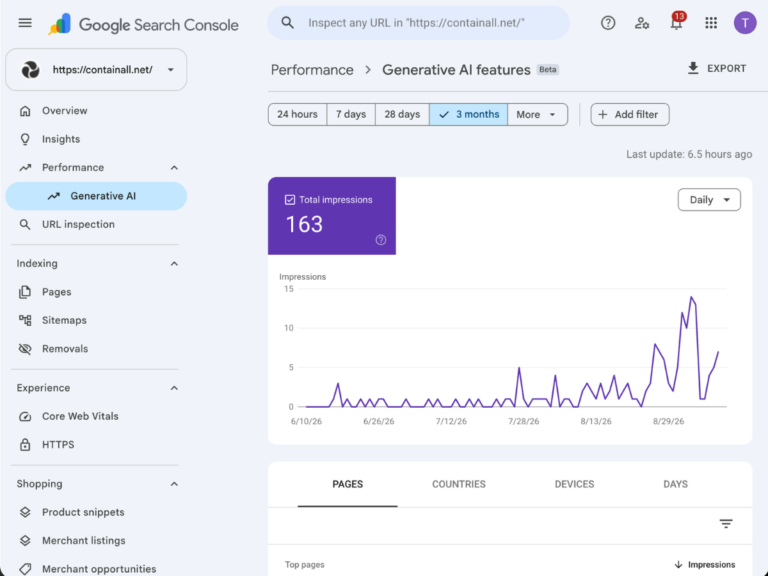
Pew Research saw the same pattern from the user side, with clicks on 8% of visits when a summary appeared versus 15% without. So score yourself on citations, branded search lift, and the AI features report in Search Console instead.
None of this means clicks stopped mattering. It means the scoreboard grew, and a team still staring at one column is reading the game wrong. Set the new baseline now, so next quarter’s report compares against reality instead of 2023.
Want a Second Set of Eyes on Your Answers?
Every mistake on this list breaks one of two rules: answer first, or prove it. Most sites can fix their worst offender in an afternoon, and the visibility research says those small edits are exactly the ones that move citations.
Book a call and I’ll read your five most important pages the way an answer engine does, then send you the exact edits, ranked by which citation you’re closest to winning.